

 All Products


How Should You Safely Get Rid of Capacitors?
 Nov 28, 2025
 1234
1234Catalog
What Is a Capacitor?How Should You Dispose of Capacitors?How Do You Dispose of Capacitors Safely?Are Capacitors Classed as Hazardous Waste?Do Capacitors Contain PCBs?Why Do Old Capacitors Explode?Final ThoughtsFrequently Ask QuestionsCapacitors store electrical charge rather than energy like a battery. Some types may also contain chemicals, heavy metals, or other hazardous substances. If they’re not disposed of correctly, they can be harmful to both the environment and human health.
In this article, we’ll look at the proper way to dispose of capacitors. We’ll cover the main types of capacitors, the potential risks they pose, and the correct disposal and recycling methods. By following these guidelines, you can handle electronic waste more safely and sustainably.
What Is a Capacitor?
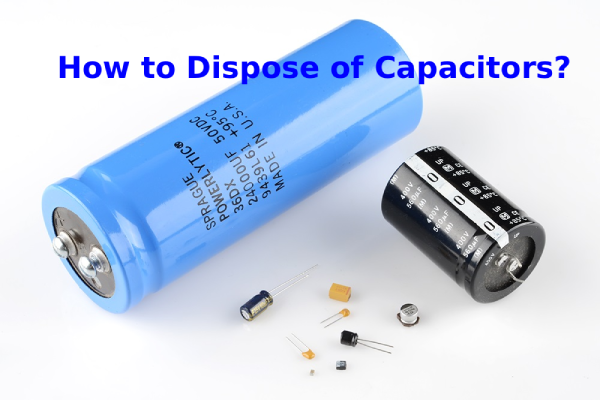
A capacitor (originally known as a condenser) is an electronic component that stores electrical energy. When a direct current (DC) is applied to a capacitor, it charges up and can then release this energy back into the circuit, allowing alternating current (AC) to pass in certain applications.
Capacitors have two terminals, usually in the form of leads, pads, or plates, which act as the positive and negative connections. One terminal receives the incoming current, and the other terminal allows the current to leave the component.
In a circuit, capacitors help manage and control electrical energy. The materials and structure inside the capacitor smooth out voltage spikes and store energy for short periods so it can be used when needed. Although they may look a bit like batteries, capacitors work very differently. They are not meant for long-term energy storage and can release their stored energy almost instantly.
How Should You Dispose of Capacitors?
When removing a capacitor for disposal, you should be careful, as it is designed to store electrical energy. After unplugging the device, leave it disconnected for at least 48 hours to reduce the risk of electric shock. Any remaining charge will usually dissipate over the next few days.
When handling or recycling air-conditioner capacitors, it’s also a good idea to wear acid-resistant gloves and safety goggles. Even when devices are disposed of or recycled in an environmentally friendly way, they are sometimes shipped overseas and dumped in landfill sites.
How Do You Dispose of Capacitors Safely?
Large capacitors must be disposed of and recycled in line with local regulations. In many areas, electronic waste – including capacitors – is controlled by specific laws. These rules are designed to ensure hazardous substances are handled safely and to protect the environment.
Here are some common options for disposing of electronic waste and capacitors:
- Electronics recycling schemes: Many local councils and organisations run electronics recycling schemes where you can safely drop off old devices. These programmes are set up to handle and recycle hazardous materials correctly.
- Specialist recyclers: Use certified electronic recycling companies that are licensed to deal with hazardous materials. They recover valuable components and ensure that dangerous substances are disposed of appropriately.
- Check local guidance: Make sure you understand the rules and guidance in your area for disposing of capacitors. Your local council or waste authority can advise on the correct procedures.
- Hazardous waste sites: If capacitors are classed as hazardous waste where you live, they should be taken to designated hazardous-waste facilities that have the right equipment and expertise to manage them safely and in an environmentally responsible way.
Are Capacitors Classed as Hazardous Waste?
Some capacitors do contain hazardous substances such as oil and PCBs. Capacitors should be removed from large appliances before disposal. Many capacitors are oil-filled, and the capacitor should be taken out for recycling so that the metal can be recovered safely.
Polychlorinated biphenyls (PCBs), which are found in some older oil-filled capacitors, are particularly dangerous. If the oil is not removed properly, recycled metal can be contaminated by PCB-containing residues.
Do Capacitors Contain PCBs?
PCBs have been used in a range of products, including capacitors for electrical equipment. Smaller PCB-filled capacitors have been used in items such as electric motors, welding equipment and fluorescent lighting. These PCB-filled capacitors typically contain around 50 grams of PCBs.
Running capacitors are usually housed in metal cases. Oil-filled capacitors manufactured after 1979 may be marked on the case with “NO PCBs”. These oil-filled capacitors can be used as starting capacitors because they do not contain PCBs.
Why Do Old Capacitors Explode?
Old capacitors can fail – and sometimes rupture or explode – for several reasons:
- Internal failures: Defects in the internal components, including issues from poor manufacturing, can lead to breakdown and failure.
- Ageing and deterioration: If a capacitor is left unused for a long period, it can degrade. In electrolytic capacitors, the electrolyte can dry out over time, increasing the risk of damage or failure.
- Excessive stress or misuse: Operating capacitors under excessive electrical stress, at high temperature, or beyond their rated limits can also lead to failure and possible explosion.
Capacitors that contain hazardous substances, such as polychlorinated biphenyls, must always be handled and disposed of correctly to avoid risks to health and the environment.
Final Thoughts
Electronic waste can contain a range of harmful materials, including lead, cadmium, beryllium, mercury and brominated flame retardants. When old electronics and components are not disposed of correctly, these toxic substances are more likely to be released into the environment.
Over time, this can lead to contaminated soil, polluted air and polluted waterways.
Hopefully, after reading this guide on how to dispose of capacitors, you’ll find it easier to deal with them safely and responsibly. If you are still unsure about how to handle or dispose of capacitors, it’s best to contact a qualified professional or an authorised recycling service for help.
Frequently Ask Questions
How should capacitors be disposed of?
Capacitors should be disposed of in line with local electronic waste regulations and guidance. They must not be thrown away in normal household rubbish. Instead, contact your local e-waste collection point, council electronics recycling scheme, or a licensed hazardous-waste facility. These services are set up to handle and recycle electronic components safely.
What is the best way to dispose of non-PCB capacitors?
Non-PCB capacitors can usually be recycled as scrap metal and oil through appropriate recycling channels. However, equipment that contains PCBs must be treated differently and disposed of as hazardous waste in line with regulations such as 40 CFR 761 (or the equivalent rules in your country). This ensures PCB-containing items are handled in a controlled and compliant way.
Do capacitors contain toxic chemicals?
Some capacitors can contain hazardous or toxic substances. For example, electrolytic capacitors may contain corrosive electrolytes that can be harmful if they come into contact with skin or eyes or if ingested. Tantalum capacitors may contain small amounts of manganese dioxide. To minimize any risk of exposure to potentially harmful chemicals, capacitors should always be handled carefully and disposed of properly.
Do capacitors leak energy?
Capacitors are designed to store electrical energy and can hold a charge for a long time once fully charged. However, in practice, some energy will gradually be lost. The dielectric material inside the capacitor can allow a very small current to flow, causing a slow discharge over time. In good-quality, properly functioning capacitors, this leakage current is very small and has little effect on performance.

Christopher Anderson
Christopher Anderson has a Ph.D. in electrical engineering, focusing on power electronics. He’s been a Senior member of the IEEE Power Electronics Society since 2021. Right now, he works with the KPR Institute of Engineering and Technology in the U.S. He also writes detailed, top-notch articles about power electronics for business-to-business electronics platforms.
Subscribe to JMBom Electronics !