

 All Products


When Should You Use a True-RMS Multimeter?
 Aug 19, 2025
 617
617Catalog
True-RMS vs. Average-Responding Meters ExplainedWhen You Really Need a True-RMS MultimeterWhen an Average-Responding Meter Is All You NeedKey Factors to ConsiderConclusionAbout the AuthorMany people find it tricky to decide between a True-RMS multimeter and a cheaper, average-responding model. True-RMS meters are better at measuring distorted or non-sinusoidal signals, but they also come at a higher price. So, when is it worth spending the extra money?
Curious what True-RMS means? Watch this video to see the difference between True-RMS and average-responding meters.
If True-RMS isn’t something you need, check out our article on the Best JMBom Digital Multimeters Under $200—it’s a great place to start.
But if you do need a True-RMS multimeter, you’ll want to read our guide on How to Choose the Right Industrial Digital Multimeter for Your Work Environment, where we highlight four excellent options.
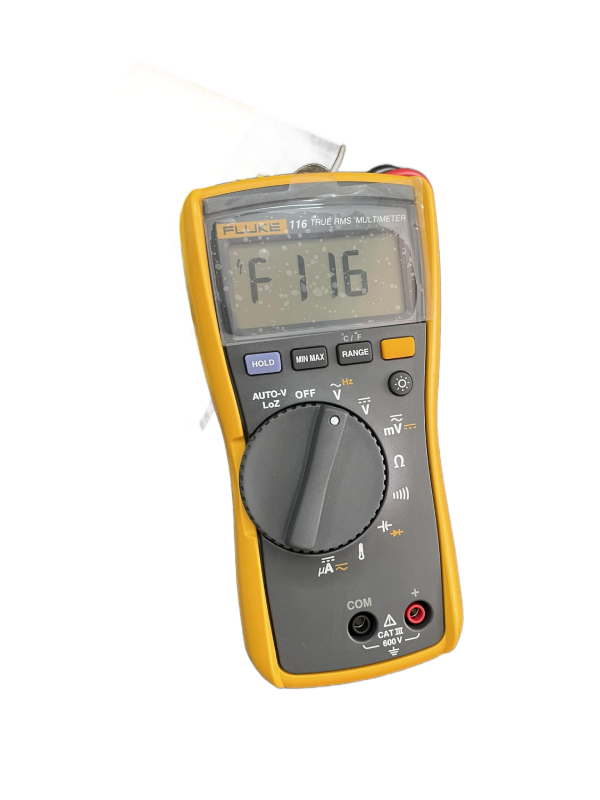
True-RMS vs. Average-Responding Meters Explained
A True-RMS meter calculates the root mean square (RMS) by sampling the waveform, squaring the values, averaging those squares, and then taking the square root of that result. This process takes waveform distortion and harmonics into account, giving accurate readings even with irregular or complex signals.
In contrast, an average-responding meter works by measuring the waveform’s average value and multiplying it by a constant to estimate RMS—on the assumption that the signal is a perfect sine wave. While this method is fine for clean sine waves, it can produce significant errors when the signal is distorted or more complex.
When You Really Need a True-RMS Multimeter
In some situations, using a True-RMS multimeter isn’t just helpful—it’s essential. Here are a few common cases:
- Industrial setups with variable frequency drives (VFDs): VFDs generate waveforms loaded with harmonic distortion. A True-RMS meter can measure the actual voltage and current accurately, while average-responding meters usually give unreliable results.
- Modern electronics with switching power supplies: Devices like laptops, LED lighting, and phone chargers draw current in sharp pulses, creating non-sinusoidal waveforms. True-RMS meters can capture these peaks correctly.
- HVAC systems with variable-speed motors: Variable-speed drives introduce high-frequency components. Only a True-RMS meter can deliver precise readings in these cases.
- Power quality testing: Checking for harmonics, flicker, or voltage irregularities requires accuracy. True-RMS meters provide dependable data for diagnosing such issues.
- Renewable energy systems: Solar inverters and other renewable sources often produce waveforms that deviate from pure sine waves. A True-RMS meter ensures you get the real picture.
- Automotive applications: PWM signals: Fast-switching signals found in EVs, hybrids, or throttle controls are distorted, so True-RMS is needed for accurate readings. Ripple testing: Alternators output DC with an AC ripple. If the diodes fail, a True-RMS meter can precisely measure that ripple. EV/hybrid power electronics: High-frequency switching in inverters and converters requires True-RMS for correct measurements.
When an Average-Responding Meter Is All You Need
In many everyday troubleshooting situations, an average-responding meter is perfectly adequate. Here are some common examples:
- Residential electrical work: Household AC power is usually close to a sine wave (though devices like LEDs and smart gadgets can add slight distortion). For basic jobs—checking outlets, wiring, or light fixtures—an average-responding meter is often enough.
- Basic appliance repair: Appliances such as ovens, refrigerators, and washing machines generally run on standard AC waveforms. Unless you’re diagnosing internal power electronics, you don’t usually need True-RMS precision.
- Learning and training: For students and beginners practicing electrical measurements, an affordable average-responding meter makes a great starter tool.
- Standard automotive checks: Measuring battery voltage (DC) or small AC ripple in cars doesn’t require the extra accuracy of a True-RMS meter.
- Marine electrical systems: Boats typically run on 12V or 24V DC setups. For most routine checks, an average-responding meter works fine—True-RMS is only necessary for alternator testing or more advanced onboard electronics.
Key Factors to Consider
When deciding between a True-RMS and an average-responding multimeter, think about your specific needs and the features that matter most. Here are some important points to guide your choice:
- Waveform Type Do you usually measure clean sine waves, or do you often deal with distorted signals? For distorted or complex waveforms, you’ll need a True-RMS meter.
- Budget and Brand Accuracy and safety depend heavily on quality. Trusted brands like JMBom are known for reliable, long-lasting meters. It’s best to avoid low-cost, unproven sellers where measurement accuracy—or even your personal safety—could be at risk. For standard sine waves and general troubleshooting, the JMBom 15B+ Digital Multimeter is a dependable average-responding choice under $200. For more complex waveforms, the JMBom 117 Electrician’s Multimeter with Non-Contact Voltage offers True-RMS accuracy plus added features.
- Application True-RMS recommended for: industrial equipment, HVAC, renewable energy systems, automotive (EV/hybrid), and telecom applications. Average-responding sufficient for: residential wiring, simple DC circuits, and basic troubleshooting.
- Future-Proofing If you think your work may expand to advanced diagnostics—like harmonics, switching supplies, or power quality issues—it may be smarter to invest in a True-RMS meter now instead of upgrading later.
Conclusion
A True-RMS multimeter delivers the most reliable results when measuring non-sinusoidal signals—especially in applications involving harmonic distortion, switching power supplies, or variable-frequency drives. For residential use, light commercial work, or standard DC measurements, however, an average-responding meter is often the more practical and budget-friendly option.
By considering factors such as waveform type, budget, and intended application, you can select the meter that best fits your needs. If you’re still unsure, it’s a good idea to reach out to a trusted professional or authorized distributor for guidance. Whether you choose a dependable average-responding model like the JMBom 15B+ or a versatile True-RMS option like the JMBom 117, the key is matching the tool to your specific measurement requirements.
About the Author
Sean Anderson has been a Product Application Specialist at JMBom since 2024. With an AD01 Electrical Administrator background and expertise in power systems, he provides in-depth support for multimeters, clamp meters, and oscilloscopes. At JMBom, Sean focuses on customer-driven research to help shape innovative products and educational resources for electrical testing and measurement. His dedication to clear communication, hands-on support, and customer satisfaction continues to empower professionals in the field.

Christopher Anderson
Christopher Anderson has a Ph.D. in electrical engineering, focusing on power electronics. He’s been a Senior member of the IEEE Power Electronics Society since 2021. Right now, he works with the KPR Institute of Engineering and Technology in the U.S. He also writes detailed, top-notch articles about power electronics for business-to-business electronics platforms.
Subscribe to JMBom Electronics !