

 All Products


Introduction to PN2222 Transistor
 Nov 26, 2025
 518
518Catalog
What is the PN2222 Transistor?PN2222 Transistor SpecificationsPN2222 Transistor EquivalentsFeaturesApplicationsFinal VerdictFrequently Ask QuestionsSince PN2222 transistors are so versatile and widely used, you’ll find them in all kinds of electronic circuits. Whether for switching or amplification, the PN2222 is well regarded for its durability and reliability. Both professionals and hobbyists like this transistor because it offers strong performance, including high current gain, low saturation voltage, and fast switching speeds. It’s also inexpensive and easy to source, making it a good choice for many different projects. In this article, we’ll take a closer look at the PN2222 transistor, including its equivalents, typical applications, and key features.
What is the PN2222 Transistor?
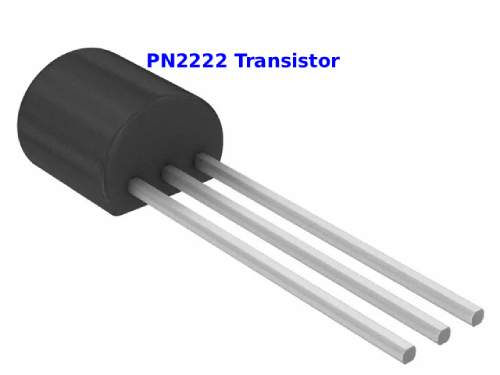
The PN2222 is an NPN bipolar junction transistor (BJT) that’s widely used as a key building block in many electronic circuits. It’s commonly used to amplify electronic signals and to switch electrical currents on and off.
In an NPN transistor like the PN2222, two N-type semiconductor layers sandwich a P-type layer. A small current applied to the middle layer (the base) controls a much larger current flowing from the collector to the emitter. This behaviour makes the PN2222 suitable for both signal amplification and current switching. It’s typically supplied in a compact TO-92 package, which is easy to handle and mount on standard PCBs or breadboards.
The PN2222 offers a high current gain (hFE), allowing it to efficiently amplify small input signals. It also has a low saturation voltage (VCE(sat)), which means it performs very well in switching applications and supports fast switching times.
Designed for low- to medium-power circuits, the PN2222 can drive small loads such as LEDs, relays and other components with collector currents up to around 600 mA. Thanks to this versatility, you’ll see it used in audio amplifier stages, signal processing circuits, and digital logic interfaces, making it a favourite among both electronics hobbyists and professional designers.
PN2222 Transistor Specifications
- Type: NPN Bipolar Junction Transistor (BJT)
- Maximum Collector-Emitter Voltage (VCEO): 30 V
- Maximum Collector-Base Voltage (VCBO): 75 V
- Maximum Emitter-Base Voltage (VEBO): 6 V
- Maximum Collector Current (IC): 600 mA
- Maximum Power Dissipation (Ptot): 625 mW
- DC Current Gain (hFE): 100–300
- Transition Frequency (fT): typically 250 MHz
- Collector-Emitter Saturation Voltage (VCE(sat)): typically 0.3–1 V
- Package Type: TO-92
- Junction Temperature Range (Tj): −55°C to +150°C
- Storage Temperature Range (Tstg): −55°C to +150°C
- Thermal Resistance, Junction to Ambient (RθJA): 200°C/W
- Mounting Style: Through-hole
- Lead Configuration: Emitter, Base, Collector (E–B–C)
PN2222 Transistor Equivalents
2N2222
The PN2222 is commonly considered equivalent to the 2N2222. Both are NPN BJTs with very similar electrical characteristics. The main difference is in the package: the PN2222 is usually supplied in a plastic TO-92 package, while the 2N2222 typically comes in a metal TO-18 can, which offers better heat dissipation. Because of this, the 2N2222 is often preferred in applications where higher power dissipation is needed. In most circuits, you can swap these two devices without any issues, as their voltage and current ratings are closely matched.
2N3904
The 2N3904 is another popular NPN transistor that can be used as an alternative to the PN2222 in many low-power applications. The PN2222 can handle up to 600 mA of collector current, whereas the 2N3904 is rated at about 200 mA. Even so, the 2N3904 is widely used in switching and amplification circuits, especially where only small currents are involved. Thanks to its low saturation voltage and good current gain, it’s a solid choice for many general-purpose electronic projects. Like the PN2222, it’s commonly available in a TO-92 package, which helps make substitution straightforward.
BC547
In some designs, the BC547 can be used as a PN2222 replacement, provided the circuit’s current requirements are lower. The BC547 is rated for a maximum collector current of around 100 mA and a maximum voltage of about 45 V. It works well for low-current switching and for amplifying small signals. The BC547 is especially common in European and Asian markets and is also supplied in a TO-92 package. Although it has a lower current handling capability than the PN2222, it’s perfectly suitable for circuits that don’t demand higher currents.
2N2369
For high-speed switching applications, the 2N2369 is a good alternative to the PN2222. It has a higher transition frequency, which allows for faster switching, but its maximum collector current is lower at about 200 mA. The 2N2369 is frequently used in pulse, timing, and digital circuits where rapid switching is more important than high current capability. It’s also available in a TO-92 package, making it a convenient drop-in replacement in designs where speed is the priority.
MPS2222
The MPS2222 is essentially the same as the PN2222 in terms of electrical performance. It shares the same maximum voltage ratings, current handling, and current gain characteristics. Like the PN2222, it is offered in a TO-92 package, allowing for easy one-to-one substitution. The MPS2222 is widely used in North America and can be reliably used in both switching and amplification circuits wherever a PN2222 would normally be specified.
Features
High Current Gain (hFE)
PN2222 transistors have a high current gain of 100 to 300, which makes them popular among transistor manufacturers. As a result of this high gain, it is ideal for amplification of signals where small input currents need to be amplified into much larger output currents. By increasing hFE, electronic circuits become more efficient, reducing the need for additional components to achieve desired amplification levels.
Low Saturation Voltage (VCE(sat))
Low collector-emitter saturation voltage is one of the many key characteristics of the PN2222. Due to low saturation voltage, transistors can switch on and off efficiently with minimal voltage drop across collector-emitter junctions. As fast switching and low power loss are critical in digital circuits, this characteristic is especially useful.
High Transition Frequency (fT)
With a transition frequency of 250 MHz, the PN2222 has a high transition rate. RF amplification and high-speed switching can be accomplished with this transistor's high-frequency capability. Because of this transistor's high transition frequency, it is suitable for use in high-frequency circuits and oscillators.
Robust Maximum Ratings
The PN2222 transistor is designed to handle a maximum collector current (IC) of 600mA, a maximum collector-emitter voltage (VCEO) of 30V, and a maximum collector-base voltage (VCBO) of 75V. Depending on the application, these transistors can handle anything from low-power signal processing to medium-power switching. For various electronic projects, the PN2222 is versatile and reliable because it can handle relatively high currents and voltages.
Thermal Stability
Temperatures up to 150°C are achieved by the PN2222 transistor, exhibiting excellent thermal stability. In environments with frequent temperature fluctuations, its high thermal tolerance makes it suitable for use in environments with various temperature conditions. Due to its TO-92 package, the transistor is able to dissipate heat adequately for most standard applications, improving its thermal stability.
Applications
Signal Amplification
The PN2222 transistor has a high current gain (hFE) that makes it a popular choice for signal amplification applications. In addition to amplifying weak signals from sensors or microphones, it can also drive other components or further process them. PN2222 can drive speakers or headphones in audio circuits, for example, by boosting the audio signals from a microphone. As it can handle moderate power levels, it can be used both as a pre-amplifier and as an output stage in audio devices.
Switching Applications
PN2222 transistors are ideal for switching applications because of their low saturation voltages and high current handling capabilities. With a small input signal, it is capable of controlling larger currents, making it an ideal component for digital circuits. LEDs, motors, and relays can be controlled by the PN2222 when used with microcontrollers. Electrical loads must be switched precisely and efficiently in automation and control systems.
Oscillators and Timers
Oscillator circuits generate periodic signals such as clocks, timers, and communication devices using the high transition frequency (fT) of the PN2222 transistor. Transistors can play an important role in oscillators such as RC (resistor-capacitor) and LC (inductor-capacitor). With the PN2222, time delays and pulse widths can be precisely controlled, essential for digital timing applications such as those utilizing 555 timer ICs.
Voltage Regulation
Additionally, PN2222 transistors are used in voltage regulation circuits where they maintain a constant output voltage despite input voltage variations. An operational amplifier and zener diodes help to provide a stable voltage output when the PN2222 acts as a pass transistor in a voltage regulator circuit. A reliable power supply for electronic devices relies on this application to ensure consistent voltage levels.
Relay Drivers
In order to operate relay coils, higher currents are needed than can be supplied directly by typical digital circuits. As a relay driver, the PN2222 transistor interfaces the low-power control signals with the high current needed to activate the relay. The PN2222 base receives small control signals that change the large current required by the relay coil, which opens or closes the relay. Industrial control systems and home automation applications require this function to isolate the control circuit from the high-power load.
Pulse Width Modulation (PWM) Control
In PWM control circuits, which are used to control motor speed, LED brightness, and power to other loads, the PN2222 transistor is often used. Transistors modulate pulse widths by switching on and off at high frequencies, controlling average power delivered to a load by modulating the PWM signal's pulse width. Controlling electrical devices with precision is key to energy efficiency and power management.
Final Verdict
The PN2222 transistor is a reliable, all-round workhorse that stands out for its versatility and robustness. Thanks to its high current gain and low saturation voltage, it’s widely used in many applications, including signal amplification, switching, and basic voltage regulation. Its relatively high transition frequency also makes it suitable for high-speed and some RF-related designs.
On top of that, the availability of equivalent parts such as the 2N2222, S8050 and 2SC1815 gives designers plenty of flexibility when it comes to circuit design, repair and maintenance. Whether you’re a hobbyist, a student, or a professional engineer, the PN2222 is a staple component you’ll want to keep in your parts drawer.
Frequently Ask Questions
What is the difference between BC547 and PN2222 transistors?
The PN2222 (and 2N2222 family) can handle higher currents, typically up to around 600–800 mA, so it’s better suited for higher-power switching applications. The BC547 is rated for lower currents, with a maximum of about 100 mA, and is more commonly used for low-power signal amplification and small-signal stages.
What is the difference between the 2N2222 and PN2222A transistors?
The 2N2222 is the original NPN transistor, usually supplied in a metal TO-18 package. The PN2222 (or PN2222A) is essentially a plastic TO-92 version of the same transistor. Because the PN2222 is in a plastic package, it generally has slightly lower power dissipation and storage temperature ratings compared to the metal-can 2N2222, but their electrical characteristics are very similar.
What is the voltage rating of the PN2222?
The PN2222 typically has a maximum collector-emitter voltage (VCEO) of around 30 V and a maximum collector-base voltage (VCBO) of up to 60–75 V, depending on the exact variant and datasheet. This allows it to be used in a wide range of low- to medium-voltage circuits and to tolerate moderate voltage spikes when correctly designed into the circuit.
Can I replace a transistor with any other transistor?
No. A replacement transistor must match several key parameters. First, it needs to be the same polarity (NPN or PNP) as the original device—if the polarity is different, the circuit will not operate correctly. You also need to make sure the substitute meets or exceeds the original’s voltage, current, and power ratings; exceeding the maximum ratings can permanently damage the transistor.
How do I know if a transistor is PNP or NPN?
In simple terms, NPN and PNP transistors use different charge carriers and biasing. In an NPN transistor, electrons are the main charge carriers, and it typically turns on when a positive base current/voltage is applied. In a PNP transistor, holes are the main carriers, and it usually turns on when the base is driven more negative relative to the emitter. You can identify the type from the part number and confirm it from the datasheet.
Is the 2N2222 a BJT or a MOSFET?
The 2N2222 is an NPN bipolar junction transistor (BJT), not a MOSFET. It has one P-doped region sandwiched between two N-doped regions and is commonly used as a general-purpose small-signal BJT.
What is the most popular NPN transistor?
The 2N2222 is one of the most widely used NPN transistors and is often treated as a “standard” example of a small-signal NPN BJT. It remains very popular for general-purpose switching and amplification in hobby, educational, and professional circuits.

Christopher Anderson
Christopher Anderson has a Ph.D. in electrical engineering, focusing on power electronics. He’s been a Senior member of the IEEE Power Electronics Society since 2021. Right now, he works with the KPR Institute of Engineering and Technology in the U.S. He also writes detailed, top-notch articles about power electronics for business-to-business electronics platforms.
Subscribe to JMBom Electronics !