

 All Products


Do ECM Motors Use Capacitors?
 Dec 03, 2025
 919
919Catalog
What Is an ECM Motor?Do ECM Motors Have Capacitors?How Does an ECM Motor Work?Types of Electronically Commutated Motors (ECM)How Do ECM Motors Typically Fail?Frequently Ask QuestionsFinal VerdictElectronically Commutated Motors (ECMs) have become increasingly popular thanks to their high energy efficiency and precise control. With their built-in electronic control systems, these motors can adjust speed, torque, and other operating parameters to suit different load requirements.
A common question people ask when learning how ECM motors work is whether they actually use capacitors. In this article, we’ll take a closer look at whether ECM motors rely on capacitors, and explore the details behind their design and operation.
What Is an ECM Motor?
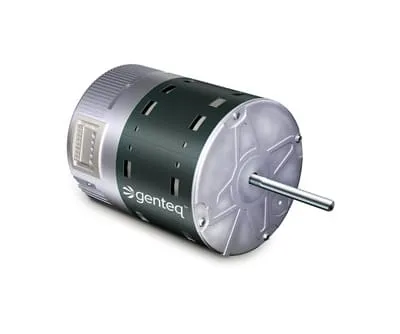
An Electronically Commutated Motor (ECM) is a type of motor that uses electronic controls to adjust its speed. ECM motors generally come in three varieties: constant CFM, constant RPM, and constant torque. While each type focuses on a different performance parameter, the basic ideas behind CFM, RPM, and torque are closely related. For simplicity, this explanation will focus on the Constant Torque ECM Motor.
HVAC systems—those responsible for heating and cooling indoor spaces—rely heavily on efficient airflow to keep homes, offices, and large buildings comfortable. Improving the energy efficiency of these systems is a major goal in modern HVAC design.
Both homeowners and businesses benefit from energy-efficient equipment because it lowers utility costs and reduces environmental impact. ECM motors, often referred to as variable-speed motors, are commonly used in air conditioners and furnaces. These motors help maintain consistent airflow while using less electricity overall.
Beyond energy savings, ECM motors offer several other advantages. They typically last longer, run more quietly, and generate less heat during operation. Their precise speed control can improve indoor air quality, reduce noise, and enhance overall comfort. By using less power and producing fewer emissions, ECM motors also help create a more environmentally friendly HVAC system.
Do ECM Motors Have Capacitors?
ECM (Electronically Controlled) motors are designed to improve efficiency and performance while lowering energy use. Traditional motors like PSC (Permanent Split Capacitor) motors rely on non-polarized capacitors and brushes to deliver power.
However, brushes in these motors wear out over time, which shortens their lifespan and increases maintenance needs. In contrast, ECM motors are brushless, which means they last longer and require far less upkeep. When used in furnaces or air conditioners, ECM motors help the system run more smoothly and use less electricity, especially when the equipment is properly maintained and cooled.
How Does an ECM Motor Work?
Inside an ECM motor, the stator contains electromagnets that are electronically energized to create rotation. The real advantage of an ECM motor comes from its built-in microprocessor, which acts as the motor’s “brain.” This smart controller constantly monitors torque and automatically adjusts the motor’s speed when needed. By doing so, it maintains the programmed CFM (airflow) by increasing speed whenever more airflow is required.
The ECM’s electronics also convert single-phase AC power into the precise, pulsed DC signals needed to operate the motor’s three-phase design. Because of this advanced control system, ECM motors use far less electricity than traditional motor types, making them significantly more energy-efficient.
Types of Electronically Commutated Motors (ECM)
Constant Speed ECMs
Constant Speed ECMs are designed to keep the motor’s speed steady even when system resistance changes. This makes them ideal for fans, blowers, and other applications where maintaining a fixed rotational speed is essential. By holding the same speed, these motors help ensure consistent performance and predictable airflow.
Constant Airflow ECMs
Constant Airflow ECMs maintain a steady airflow despite shifts in system resistance. They are widely used in HVAC systems, where delivering a precise and continuous supply of air is crucial for efficiency. As pressure changes throughout the system, these motors automatically adjust their speed and torque to keep airflow at the desired level.
Constant Torque ECMs
Constant Torque ECMs are built to deliver consistent torque regardless of variations in system resistance. They are commonly used in equipment such as pumps and conveyors, where maintaining stable torque is key to reliable operation. With their ability to handle changing loads, constant torque ECMs help ensure smooth and dependable performance.
How Do ECM Motors Typically Fail?
Electrical Surges
Electrical surges can severely damage ECM motors by causing sudden spikes in voltage. These surges can result from lightning strikes, unstable power grids, or faulty wiring. Because ECM motors rely on sensitive electronic controls, they are more vulnerable to this kind of damage. Using surge protectors and voltage regulators can significantly reduce the risk.
Overheating
Overheating is one of the most common causes of ECM motor failure. As temperatures rise, insulation, lubricants, and electronic components begin to break down, reducing efficiency and shortening the motor’s lifespan. Poor ventilation, blocked airflow, or consistently running the motor too hot can all contribute to overheating. Proper ventilation and regular checks of the cooling system can help prevent these issues.
Electronic Component Failure
ECM motors rely on various electronics—such as microcontrollers, sensors, and power circuits—for precise control. Factors like manufacturing defects, aging, electrical stress, or harsh environmental conditions can cause these components to fail. When this happens, the motor may run erratically, lose control, or stop working altogether. Regular maintenance, careful handling, and early detection of warning signs can reduce the risk.
Blower-Related Issues
In HVAC systems, ECM motors often power the blower assembly. If the blower is installed incorrectly or not maintained, it can create excessive load, become misaligned, or restrict airflow. These issues force the motor to work harder than it should, leading to premature wear or failure.
Moisture
ECM motors are sensitive to moisture. Water or high humidity can cause corrosion, short circuits, or insulation breakdown. If moisture gets inside the motor housing, it can quickly lead to serious damage. Proper sealing, insulation, and routine maintenance help protect the motor from moisture-related problems.
Bearing Failure
Bearings allow the motor to run smoothly. Over time, they can wear out due to constant use, insufficient lubrication, or contamination. When bearings fail, they create friction and imbalance, which can damage the motor. Regular lubrication, monitoring for early signs of wear, and timely replacement help prevent bearing failures.
Frequently Ask Questions
What are ECM motors made of?
Electronically Commutated Motors are brushless, three-phase DC motors. They consist of three main parts: a controller, a permanent-magnet rotor, and an electronic circuit board.
How efficient are ECM motors?
ECM motors are significantly more efficient than traditional motors. Thanks to their variable-speed capability and intelligent control algorithms, they can adjust speed, torque, and airflow to match real-time demand. This reduces energy use and lowers operating costs. Their ability to tailor output to the load makes ECM motors highly efficient across many applications.
Do all electric motors use a capacitor?
No, not every motor needs a capacitor. Larger electric motors often use capacitors to provide the extra current needed during startup. Smaller motors typically don’t require this additional boost and can run without one.
Do ECM motors have windings?
Yes, ECM motors do have windings. The stator contains multiple windings that generate the magnetic fields needed for operation. However, ECM motors use a different winding configuration and rely on electronic control for variable-speed operation, unlike traditional single-speed motors.
Are ECM motors AC or DC?
ECM motors are powered by AC (Alternating Current) mains, as commonly found in homes and commercial buildings. Internally, however, their electronics convert this AC power to the appropriate DC signals needed for efficient, variable-speed motor control.
Final Verdict
ECM motors are designed to be a more efficient and advanced alternative to PSC motors. Unlike PSC motors, ECMs do not rely on a capacitor to operate, as their built-in electronics handle all the necessary control functions. The type of motor you choose should depend on your specific application, so it’s important to understand your needs and select the ECM model that suits them best.
We hope this article has cleared up any questions you had about whether ECM motors use capacitors. If you still have anything you’d like to ask, feel free to leave a comment—we’re always happy to help. Thank you for reading!

Christopher Anderson
Christopher Anderson has a Ph.D. in electrical engineering, focusing on power electronics. He’s been a Senior member of the IEEE Power Electronics Society since 2021. Right now, he works with the KPR Institute of Engineering and Technology in the U.S. He also writes detailed, top-notch articles about power electronics for business-to-business electronics platforms.
Subscribe to JMBom Electronics !