

 All Products


Guide to Hybrid Potentiometer
 Dec 10, 2025
 649
649Catalog
Understanding Hybrid PotentiometersAdvantages of Hybrid PotentiometersTypes of Hybrid PotentiometersWorking Principle of Hybrid PotentiometersApplications of Hybrid PotentiometersSelecting the Right Hybrid PotentiometerInstallation and MaintenanceRelated ArticlesPicture your car’s cruise control automatically keeping a steady speed, or your stereo delivering perfectly balanced audio just by turning a dial. Hybrid potentiometers make all of that possible!
In this short guide, we’ll break down what hybrid potentiometers are, the different types available, their key advantages, and where they’re commonly used.
Understanding Hybrid Potentiometers
A. Definition and basic idea
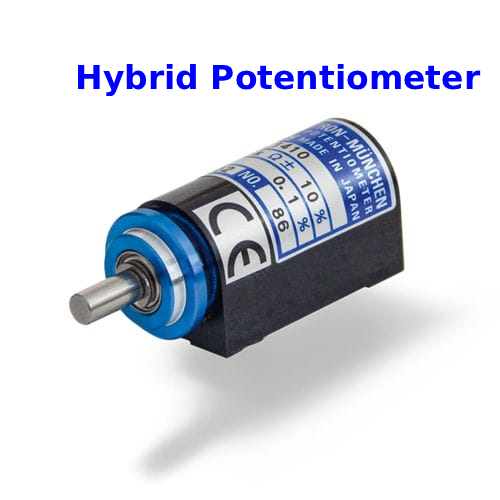
Hybrid potentiometers are specialised electronic components that combine classic mechanical operation with modern digital technology. They’re used to measure and regulate electrical potential (voltage) across a circuit.
Because they bring together both analogue and digital elements, hybrid potentiometers offer far greater precision, reliability and flexibility than conventional versions.
B. How they differ from traditional potentiometers
Unlike standard potentiometers that rely solely on mechanical resistance adjustment, hybrid designs use a blend of mechanical movement and electronic circuitry.
This approach allows for:
- more precise and consistent readings
- higher resolution control
- easier integration with digital equipment
- improved communication with other devices
C. Main parts of a hybrid potentiometer
A typical hybrid potentiometer includes the following elements:
- Resistive element: works much like a standard potentiometer and enables resistance changes
- Wiper: the moving contact that slides across the resistive path to adjust resistance
- Analogue-to-Digital Converter (ADC): converts the analogue voltage into digital information
- Microcontroller: processes digital signals and manages overall behaviour
- Memory: stores calibration data and user settings
- Digital interface: enables communication with external devices or systems
Advantages of Hybrid Potentiometers
A. Higher precision and accuracy
Compared with traditional potentiometer designs, hybrids offer noticeable improvements in both precision and accuracy.
Because they combine mechanical movement with electronic processing, they deliver higher resolution and far more stable readings. This is particularly valuable in situations where even tiny errors could cause major issues—for example, industrial control systems or premium audio equipment.
B. Greater durability and longer service life
One of the biggest benefits of hybrid potentiometers is their exceptional durability. The addition of electronic elements means there’s less mechanical wear, which helps extend their operating life.
As a result, they continue performing reliably over long periods, with fewer replacements required—saving both time and resources in the long run.
C. Broader range of applications
Thanks to their mixed analogue-digital design, hybrid potentiometers can be used in far more environments than conventional types.
Their versatility and enhanced performance make them suitable for:
- automotive systems
- aerospace technology
- medical equipment and many other advanced applications.
D. Long-term cost efficiency
Although hybrid potentiometers may cost slightly more upfront, they offer excellent value over time. Their longer lifespan, reduced maintenance requirements and stronger overall performance result in lower operating costs throughout their service life.
For many businesses and technical fields, they’re a worthwhile upgrade for keeping costs down whilst maintaining high output efficiency.
Types of Hybrid Potentiometers
A. Digital–analogue hybrid potentiometers
Digital–analogue hybrid potentiometers bring together the strongest features of both analogue and digital systems, offering greater flexibility and improved accuracy.
In essence, digital circuitry is added to enhance the capabilities of a standard analogue potentiometer. Typically, they combine a traditional resistive element with a digital encoder, which enables precise position detection and much finer resolution.
These are especially beneficial in applications where accurate control and reliable data conversion are essential.
B. Optical hybrid potentiometers
Optical hybrid potentiometers use light-based techniques to detect shaft position. They usually include a light source, a photosensor and a coded disc or strip.
As the shaft turns, the pattern on the disc interrupts the beam of light, and the sensor interprets these changes to determine the exact position.
Because this system works without physical contact, it offers excellent durability, making optical hybrids well-suited to demanding environments or applications involving heavy use.
C. Magnetic hybrid potentiometers
Magnetic hybrid potentiometers rely on magnetic sensing—often Hall-effect or magnetoresistive elements—to detect the position of a magnet fixed to the moving shaft.
Since there is no direct contact between the sensing components and the moving parts, these designs are highly dependable and well suited to environments where reliability and resistance to dust, vibration or other environmental factors are crucial.
Working Principle of Hybrid Potentiometers
Combination of resistive and non-contact sensing
Hybrid potentiometers make use of both resistive elements and non-contact sensing technologies, giving them the benefits of each approach.
The resistive track provides a solid baseline measurement, while non-contact techniques—such as Hall-effect or magnetoresistive sensing—add extra precision and durability.
By using both methods together, hybrid potentiometers can measure position accurately without the physical wear that’s common in traditional mechanical designs.
Signal processing and output generation
After the position has been detected, the internal electronics process the signals coming from each sensing system.
Sophisticated algorithms compare and merge these inputs to produce a highly accurate final output signal. This is typically converted into a standard format—such as a specific voltage or current—so that control systems or other electronic devices can easily read it.
Calibration and adjustment functions
To maintain accuracy, hybrid potentiometers include advanced calibration and adjustment features.
They can be calibrated to compensate for environmental conditions and manufacturing variations, while some designs include automatic self-calibration to continue correcting output drift caused by long-term temperature changes or wear.
Applications of Hybrid Potentiometers
Hybrid potentiometers are now used across many modern industries thanks to their precision, durability and versatility. Below are some of the main fields where they’ve proved especially valuable:
Industrial automation and control
In manufacturing environments, hybrid potentiometers are widely used to monitor and control automated systems.
They’re commonly found in:
- robotics
- conveyor systems
- production machinery
Here they provide accurate positional feedback and reliable adjustment. Their robust design also makes them well suited to factory settings where vibration, heavy use and tough conditions are common.
Audio equipment and sound engineering
Hybrid potentiometers are frequently used in professional audio gear such as studio mixers, as well as premium home audio systems.
Their precise control allows engineers to fine-tune levels and sound characteristics with ease—crucial in situations where audio performance is a priority. Low noise, smooth adjustment and long operating life also make them a strong choice for demanding audio applications.
Aerospace and defence
Within aerospace and defence, hybrid potentiometers are employed in systems such as:
- flight controls
- radar equipment
- missile guidance
In these sectors, components must meet the very highest standards for accuracy, reliability and performance, even under extreme temperatures or vibration—making hybrid potentiometers a trusted solution.
Selecting the Right Hybrid Potentiometer
When choosing a hybrid potentiometer, it’s worth keeping several important factors in mind:
- Resolution: determine the level of precision your application requires
- Resistance range: check the total resistance needed by your circuit
- Linearity: assess how critical linear output is for your design
- Operating temperature: make sure it can handle the environmental conditions
- Size and format: confirm that the component will physically fit in your layout
Matching specifications to your application
To identify the most appropriate model:
- review the exact requirements and limitations of your application
- compare these with the specifications of each potentiometer
- choose options that meet or exceed your technical criteria
- consider any additional features that could be helpful, such as sealed designs for harsh settings or multi-turn versions for fine adjustment
Considering manufacturer quality and support
The reliability of a hybrid potentiometer is heavily influenced by who makes it. It’s sensible to:
- research the manufacturer’s reputation
- favour suppliers known for producing dependable, high-quality components
- check whether technical guidance and documentation are available
- review warranty terms and after-sales support policies
All of these will help ensure you select a potentiometer that performs well and remains reliable over the long term.
Installation and Maintenance
Proper installation
To achieve the best performance, hybrid potentiometers must be installed exactly according to the manufacturer’s guidance.
Begin by making sure the mounting surface is clean and free from debris. Use the recommended screws or brackets to secure the device firmly—taking care not to over-tighten and risk damaging it. Where required, use alignment tools to ensure correct positioning and optimum operation.
Calibration
Once installed, calibration is essential to ensure accurate readings.
Start by setting the potentiometer to its zero point and adjusting the output accordingly. Then set it to its full-scale position and fine-tune as needed. Repeating the process several times will help achieve consistent results across the full range of motion.
Troubleshooting common problems
If you experience issues with a hybrid potentiometer, first examine it for loose connections or mechanical obstruction.
Irregular readings may point to contamination or wear, while a complete loss of output could indicate internal damage. Always refer to the manufacturer’s troubleshooting guidelines for detailed instructions and recommended checks.
Good maintenance practice
To keep hybrid potentiometers performing reliably, carry out occasional inspections, ensuring connections are secure and the device remains clean. Avoid unnecessary force, contamination or exposure to extreme temperatures unless the model is specifically rated for such conditions.
Routine checks and proper handling will help maintain accuracy and extend service life, ensuring dependable performance across a wide range of applications.
Related Articles

Amanda Miller
Amanda Miller is a senior electronics engineer with 6 years of experience. She focuses on studying resistors, transistors, and package design in detail. Her deep knowledge helps her bring innovation and high standards to the electronics industry.
Subscribe to JMBom Electronics !