

 All Products


Diode Dynamics: Behavior in Power and RF Circuits
 Dec 11, 2025
 761
761Catalog
The Static Diode: The Starting Point for Diode DynamicsTime Matters: Switching, Reverse Recovery, and CapacitanceA Cast of Characters: Different Diode Types and Their DynamicsDiode Dynamics in Power Electronics: From Wall Warts to SpacecraftDiode Dynamics in Signal, RF, and Protection CircuitsThermal and Reliability Dynamics: When Silicon Meets Real LifeMeasuring and Simulating Diode DynamicsDesign Checklist: Taming Diode Dynamics in Real ProjectsFrequently Ask Questions About Diode DynamicsRelated ArticlesWhat Do We Mean by Diode Dynamics? When you look at a textbook’s I-V curve, a diode might seem pretty straightforward:
- Forward: conducts when voltage hits about 0.7 V (or 0.2–0.3 V for Schottky diodes).
- Reverse: essentially off.
But in the real world, that’s just the basic picture.
Diode dynamics is what happens when conditions change:
- The voltage jumps,
- The current builds up,
- The temperature rises,
- The nearby MOSFET switches on and off at 250 kHz,
- Your automotive LED strip gets hit with a harsh 40 V surge and still works like a champ.
So, what’s included in diode dynamics?
- Switching behavior: how quickly a diode turns on and off.
- Charge storage: the amount of “charge baggage” it carries, causing reverse recovery spikes.
- Capacitance: how the junction acts like a voltage-sensitive capacitor.
- Thermal behavior: how temperature and thermal resistance turn current pulses into heat.
- Long-term reliability: how repeated stress impacts the device over thousands of hours.
When you’re designing:
- A buck converter with an STM32 or ATmega,
- A gate driver for a SiC MOSFET and need the ideal freewheeling diode,
- Or an LED headlight module that must pass automotive EMC standards and survive jump-starts,
then diode dynamics isn’t just a theory – it’s critical to your design’s success.
The Static Diode: The Starting Point for Diode Dynamics
Before we dive into the fast-paced world of diode dynamics, we first need to understand the basics: how a diode behaves under DC conditions.
2.1 The PN Junction in a Nutshell
A basic silicon diode consists of a PN junction:
- P-side: full of holes.
- N-side: packed with electrons. At the junction, charge carriers diffuse, creating a depletion region with an electric field. This field leads to:
- Forward bias: applying a voltage pushes carriers into the junction, resulting in exponential current flow.
- Reverse bias: the depletion region widens, and current is nearly zero (except for a tiny leakage).
The well-known Shockley equation describes the static I-V curve. Simple enough. But once you start changing the voltage quickly, the diode’s response has its own timing and inertia – that’s where diode dynamics comes into play.
2.2 Real Diodes Aren’t Perfect
In the real world, diode packages add:
- Series resistance (from bond wires, sheet resistance of the silicon),
- Parasitic inductance (from leads and the package),
- Junction capacitance (which depends on the voltage).
Even in a DC circuit, these characteristics can hint at how the diode will behave when things get dynamic:
- Big junction capacitance = more "springiness" in high-speed circuits.
- Larger dice and packages = better thermal performance, but more stored charge.
So, when you pick a "standard" diode like the 1N4007 without checking its dynamic specifications, you're essentially agreeing to deal with whatever diode dynamics throws your way.
Time Matters: Switching, Reverse Recovery, and Capacitance
Let’s move on to the exciting part.
Imagine a MOSFET switching a diode on and off in a 100 kHz buck converter. The MOSFET is the star of the show, but the diode dynamics? They’re the supporting cast that can either steal the spotlight or completely ruin the performance.
3.1 Forward Switching
When a diode switches from reverse to forward:
- Carriers need to be injected into the junction.
- The junction capacitance must charge up.
This causes a turn-on delay and sometimes a forward overshoot. In many power applications, forward switching losses are minor compared to reverse recovery, but they can still cause ringing and EMI (electromagnetic interference).
3.2 Reverse Recovery: The Main Villain
Reverse recovery happens when the diode switches from forward conduction to reverse bias:
- The circuit suddenly applies a reverse voltage.
- The diode doesn’t immediately block; the stored charge in the junction must be cleared first.
For a brief moment, a reverse current pulse flows (called the reverse recovery current). The diode only fully blocks once the charge is cleared.
Key parameters in reverse recovery:
- Qrr (reverse recovery charge): the amount of charge that needs to be cleared.
- trr (reverse recovery time): the time it takes for the reverse current to stop.
- Irr (peak reverse recovery current): the magnitude of the reverse current spike.
In the MCU (Microcontroller Unit) world, reverse recovery is like a blocking call in your code: the MOSFET wants to move on, but it has to wait for the diode to finish its business. This wait time adds extra loss and stress to the system.
3.3 Junction Capacitance: The Quiet Shapeshifter
Even when fully reverse biased, diodes act like voltage-dependent capacitors:
- At low reverse voltage, the depletion region is wider, leading to lower capacitance.
- At higher reverse voltage, the depletion region widens further, reducing capacitance even more.
In RF circuits, this behavior is deliberately used:
- Varactor diodes take advantage of this effect to act as voltage-controlled capacitors, tuning filters and oscillators.
In fast digital or power circuits, this same capacitance leads to:
- Edge slowing,
- Ringing with PCB inductance,
- Extra losses in gate-driver stages.
So whenever a datasheet lists Cj, Coss, or similar, you're looking at part of the diode dynamics story in action.
A Cast of Characters: Different Diode Types and Their Dynamics
Not all diodes are the same. Think of them as characters in a series—each with its own personality and quirks when it comes to dynamics.
4.1 Standard Rectifier Diodes
These are the reliable workhorses:
- Cheap, durable, with thick junctions.
- Slow reverse recovery – trr in the tens of microseconds.
- Perfect for 50/60 Hz rectification (linear power supplies), but not ideal for fast SMPS.
If you stick a standard rectifier in a 200 kHz buck converter, the diode dynamics will slow your design down, like a villainous drag in a sci-fi flick.
4.2 Fast Recovery and Ultrafast Diodes
These are the quick, efficient ones, designed to minimize charge storage:
- Shorter trr, lower Qrr.
- Slightly higher forward voltage and more expensive.
- They're the “trained assassins” of the diode world—more reactive than standard rectifiers, but highly effective for fast switching.
4.3 Schottky Diodes
Schottky diodes are metal–semiconductor junctions rather than PN junctions:
- Very low forward voltage (VF).
- Minimal stored charge, meaning no classic reverse recovery tail.
- However, they come with larger leakage current, especially at high temperatures.
In SMPS designs, Schottkys are often your go-to for minimizing diode dynamic losses, especially on low-voltage rails like 5 V, 3.3 V, or 1.8 V.
4.4 Zener and TVS Diodes
These diodes operate in the breakdown region:
- Zener diodes provide stable reference voltages.
- TVS (Transient Voltage Suppression) diodes are like lightning rods—quickly clamping ultra-fast voltage spikes.
The dynamics of these diodes matter in:
- Clamping speed: how fast they react to surges.
- Energy handling: how much energy they can absorb without being damaged.
In automotive and industrial applications, TVS diode dynamics can be the difference between your electronics surviving a load dump or frying.
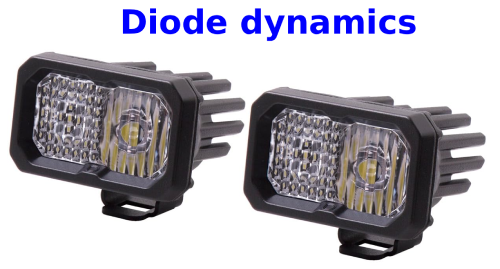
4.5 LEDs (Including Automotive LED Brands, "Diode Dynamics" Style)
LEDs are diodes that emit light:
- Their I-V curve still follows typical diode behavior, but their dynamics also involve optical response.
- Turn-on and turn-off times are key factors in: High-frequency PWM dimming, Visible flicker perception, Automotive signaling standards.
Aftermarket lighting companies pay extra attention to LED diode dynamics—drivers need to manage inrush current, thermal rise, transients, and PWM frequency, all while ensuring the LEDs stay within safe operating limits and look great on camera (hello, YouTube reviews!).
4.6 Photodiodes and PIN Diodes
Photodiodes flip the script: photons come in, current flows out. Their dynamics are all about:
- Response time (ranging from nanoseconds to milliseconds, depending on the type).
- Capacitance vs. area trade-off (fast vs. sensitive).
PIN diodes are used in RF circuits as switches and attenuators:
- In RF applications, their resistance and capacitance change with bias current.
- Diode dynamics affect switching speed, isolation, and insertion loss.
Diode Dynamics in Power Electronics: From Wall Warts to Spacecraft
If you’ve ever designed a buck converter with a microcontroller-controlled power stage, you’ve likely encountered diode dynamics the hard way: overheating components, unexpected ringing, and failed EMC tests.
5.1 The Buck Converter Example
A classic non-synchronous buck converter setup:
- High-side MOSFET
- Freewheeling diode
- Inductor and output capacitor
Every switching cycle looks like this:
- MOSFET turns on → current flows through the MOSFET and inductor.
- MOSFET turns off → current commutates into the diode.
- The diode conducts until the next cycle begins.
Here, diode dynamics influence:
- Efficiency: Reverse recovery losses contribute to MOSFET loss.
- EMI: Reverse current spikes generate noise due to dI/dt and dV/dt.
- Switching stress: The MOSFET faces large voltage overshoots if reverse recovery is problematic.
Swapping a generic rectifier for an ultrafast or Schottky diode is like replacing a clumsy side character with a trained stunt double—the whole scene becomes smoother, quieter, and more efficient.
5.2 Synchronous Rectification and “Killing the Diode”
Modern high-efficiency power supplies use synchronous rectification:
- The freewheeling diode is replaced with a MOSFET, controlled by a driver or MCU.
- Diode conduction is now just a backup (via the body diode).
Even in this setup, diode dynamics still matter:
- The MOSFET’s body diode has its own reverse recovery behavior.
- If your timing is off, the body diode turns on, causing an ugly reverse recovery spike when the synchronous FET takes over.
A well-designed gate driver is essentially about micromanaging diode dynamics at the silicon level.
5.3 PFC Stages, Boost Converters, and Reverse Recovery Hell
In boost PFC or high-power boost converters:
- The diode handles high currents and high voltages.
- Reverse recovery can inject spiky currents directly into the MOSFET and the power line.
To mitigate this, designers use:
- Soft-recovery diodes.
- SiC Schottky diodes (which have almost no Qrr).
- Carefully tuned snubbers and RC damping.
Every time you choose a SiC diode over a slower silicon one, you're essentially investing in better diode dynamics, which improves performance and reduces unwanted side effects.
Diode Dynamics in Signal, RF, and Protection Circuits
Diode dynamics aren’t just important in power circuits—they also play a crucial role in analog signal chains and RF circuits. In these applications, diodes act like supporting characters that you don’t notice until you re-watch the movie and spot the details.
6.1 Envelope Detectors and Demodulators
In RF receivers:
- A simple envelope detector is made with a diode, capacitor, and resistor.
- The diode’s dynamics influence: Detection speed, Distortion, Minimum signal level.
Schottky diodes are often used here because of their low forward voltage and fast response, making them ideal for this purpose.
6.2 Clamp and Limiter Circuits
In op-amp front ends or ADC protection:
- Diodes clamp the signal to specific rails or reference voltages.
- Diode dynamics determine whether: Fast spikes get through before the diode fully conducts. Ringing occurs due to the diode’s capacitance combined with board inductance.
TVS (Transient Voltage Suppression) diodes add an extra layer of protection:
- They need to activate quickly and absorb energy efficiently.
- If their dynamic response is too slow, components like the MCU or FPGA pin might still be exposed to damaging voltage.
6.3 Mixers and RF Switches
PIN diodes and Schottky diodes are commonly found in:
- Double-balanced mixers,
- T/R (Transmit/Receive) switches,
- Variable attenuators.
In the RF domain, diode dynamics come into play in:
- Charge storage effects at high RF frequencies,
- Bias-dependent impedance,
- Intermodulation distortion (IMD).
RF engineers use tools like Smith charts and S-parameters, but underneath it all, it’s still the fundamental diode dynamics driving the performance.
Thermal and Reliability Dynamics: When Silicon Meets Real Life
Diode datasheets can give the illusion of certainty:
- “Average current: 5 A”
- “Peak surge: 100 A”
But these numbers are only a snapshot in a 3D space of current, time, and temperature.
7.1 Junction Temperature and Derating
Diode conduction and switching losses turn into heat, and as a result:
- Junction temperature increases with power dissipation and thermal resistance.
- As temperature rises: Leakage current increases, Forward voltage drop changes, The safe operating area becomes smaller.
Here, diode dynamics are primarily thermal:
- Short bursts of heat (like a quick action scene) might be manageable.
- Continuous overloads, on the other hand, slowly “cook” the junction (think of it like a long war movie with no intermission).
7.2 Repetitive Stress: EM Cycles as a TV Series
Every surge and switching cycle is like an episode in a long-running show:
- Repetitive reverse recovery stress,
- Avalanche events (when the diode temporarily operates above its rated voltage),
- Thermal cycling of the package and solder joints.
In applications like automotive lighting or industrial power supplies, designers don’t just choose diodes based on electrical performance—they also factor in the diode’s lifetime over countless episodes:
- 50,000 hours of operation,
- Millions or even billions of cycles.
That’s why high-end LED modules, including those from specialized automotive brands, often feature:
- Overrated diodes and MOSFETs (to handle stresses),
- Robust TVS networks (to protect against voltage spikes),
- Thermal designs that account for long-term diode dynamics and ensure longevity.
Measuring and Simulating Diode Dynamics
How do you measure diode dynamics without mind-reading silicon, like an MCU-powered telepath?
8.1 Oscilloscope + Current Probe
For power circuits:
- Use a current probe in series with the diode and a voltage probe across it.
- Perform a double-pulse test or capture a switching event.
What you'll see:
- Forward conduction interval,
- Reverse recovery spike,
- Voltage overshoot ringing.
This is the action sequence of diode dynamics, frame by frame, on your oscilloscope screen.
8.2 Parameter Extraction and SPICE
Many vendors provide SPICE models that include:
- Junction capacitance vs. voltage,
- Reverse recovery parameters (like Qrr and trr),
- Series resistance and parasitics.
By simulating your SMPS or RF circuit, you can explore:
- How different diodes affect efficiency,
- The amount of snubbering required,
- How your PCB layout affects ringing.
But remember, simulations are only as good as their models. Comparing real diode dynamics to SPICE simulations is like watching both the trailer and the final cut of your favorite show.
8.3 Lab Tricks with Microcontrollers and FPGAs
You can build your own diode dynamics lab using:
- A microcontroller or FPGA to generate gate signals,
- A MOSFET stage and test inductor,
- Configurable delays, duty cycles, and amplitudes.
Log data on each run, such as:
- Peak reverse recovery current,
- Switching energy,
- Temperature rise.
With this setup, your MCU dev board isn’t just blinking LEDs—it’s running a full diode dynamics experiment, giving you hands-on insight into how diodes perform under real conditions.
Design Checklist: Taming Diode Dynamics in Real Projects
Here’s a practical checklist you can paste directly into your design notes:
1. Define the Switching Environment
- Consider frequency, current, voltage, and edge rates.
- Higher speed = more critical diode dynamics.
2. Pick the Right Diode Family
- Rectifiers for 50/60 Hz applications only.
- Fast/ultrafast diodes for medium-speed SMPS.
- Schottky or SiC diodes for high-frequency and low-loss designs.
3. Check Reverse Recovery Specs
- Look for Qrr, trr, and Irr in datasheets.
- Compare across parts—small differences matter at high power.
4. Watch Junction Capacitance
- For RF or high-speed switching, large Cj can degrade performance.
- Consider varactor tuning or special biasing schemes.
5. Mind the Thermal Path
- Check RθJA and RθJC (thermal resistance).
- Provide adequate copper, heatsinking, or airflow.
6. Plan Protection
- Use TVS diodes at vulnerable points.
- Implement snubbers around high dI/dt loops.
- Place clamp diodes for inductive loads.
7. Simulate, Then Measure
- Use SPICE models for a first-pass insight.
- Confirm results with oscilloscope measurements of real diode dynamics.
8. Lay Out the PCB for Dynamics
- Minimize loop area in high-current paths.
- Keep the diode and MOSFET close.
- Pay attention to return paths.
9. Design for Lifetime, Not Just Day One
- Consider derating for temperature and current.
- Think about repetitive surge events (motors, automotive cranks, etc.).
10. Document Assumptions
- Write down why you chose each diode.
- Include notes on diode dynamics so future you (or a colleague) knows what not to change casually.
By following this checklist, you’ll not only select the right diode for your application but also ensure that your design can handle the long-term stresses of real-world performance.
Frequently Ask Questions About Diode Dynamics
Why does my “fast” diode still cause big voltage spikes?
Because “fast” is relative. The diode's switching speed may still be slow compared to your switching edges, or your layout inductance could be amplifying the reverse recovery current, turning it into voltage spikes.
Do Schottky diodes have zero reverse recovery?
Not exactly. Schottky diodes have very low stored charge, so their reverse recovery tails are tiny. However, they still have dynamic capacitance and leakage, which can be significant at high voltage and temperature.
How do I reduce diode switching losses in my converter?
Use diodes with lower Qrr and trr, consider Schottky or SiC diodes, optimize your gate drive timing, and minimize stray inductance. This will prevent stored charge and parasitics from colliding and causing excessive losses.
Why do TVS diodes sometimes “miss” a surge?
TVS diodes have a finite response time, and layout inductance can delay their clamping action at the protected node. You may need to position them closer to the protection point, explore different TVS technologies, or use multiple devices across the system for better coverage.
Is diode dynamics only important at high power?
No. Even in RF, sensor interfaces, and precision analog circuits, small diodes can introduce distortion, delay, and leakage. In low-power designs, every picoamp and picofarad can have a big impact.
Diode Dynamics: The Hidden Plot Behind Every Circuit
If you strip away the buzzwords, diode dynamics is really about:
- How diodes behave over time—electrically, thermally, and optically—when real circuits, transients, and environments come into play.
The moment you:
- Push switching frequency higher,
- Shrink your layout,
- Feed power electronics from noisy sources,
- Or drive LEDs and sensors directly from your MCU or FPGA,
you’re writing a new chapter in your design’s diode dynamics story.
Learn to read these stories in datasheets, waveforms, and PCB layouts, and you’ll start to understand why some projects run cool and quiet for years, while others flicker, ring, or fail—like a cancelled TV series after one season.
Related Articles
Introduction to 13009D Transistor

Christopher Anderson
Christopher Anderson has a Ph.D. in electrical engineering, focusing on power electronics. He’s been a Senior member of the IEEE Power Electronics Society since 2021. Right now, he works with the KPR Institute of Engineering and Technology in the U.S. He also writes detailed, top-notch articles about power electronics for business-to-business electronics platforms.
Subscribe to JMBom Electronics !