

 All Products


What is a CMOS Sensor?
 Dec 17, 2025
 693
693Catalog
What is a CMOS Sensor?CMOS Sensor DesignCMOS Sensor Design and OperationHow Does a CMOS Sensor Work?Camera System Design and FunctionCMOS Sensor TypesCMOS Sensor IC: OV7670 Camera ModuleDifference Between CMOS and CCD SensorsAdvantages of CMOS SensorsDisadvantages of CMOS SensorsApplications of CMOS SensorsSummaryRelated ArticlesImaging electronics play a crucial role in the performance of imaging systems. These systems consist of various components, including cameras, software, capture boards, cables, and more. Understanding the camera sensor is essential because it is a key part of the imaging system or camera. However, even two cameras with the same sensor may have different performance and features due to the way the electronics are integrated within the design. In the past, image sensors like Vidicons and Plumbicons were used in cameras, but today, the most common types of sensors are CMOS and CCD sensors. Image sensors are semiconductor devices that convert optical images into digital signals and are widely used in digital cameras and optical devices.
What is a CMOS Sensor?
A CMOS (complementary metal-oxide-semiconductor) sensor is an electronic chip that converts light (photons) into electrical signals (electrons) for digital processing. These sensors are primarily used in digital cameras, CCTV cameras, and video cameras to capture images. CMOS sensors can also be found in devices like scanners, barcode readers, and even astronomical telescopes. The cost-effective manufacturing process of CMOS technology makes it possible to produce affordable consumer devices.
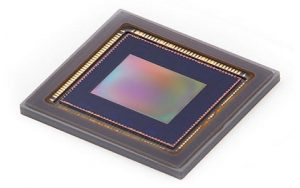
CMOS Sensor
The CMOS sensor operates based on the photoelectric effect, converting photons into electrical energy. Unlike CCD sensors, CMOS sensors directly convert the electric charge into voltage within each pixel. Today, CMOS sensors offer excellent image quality and high frame rates, making them ideal for high-performance industrial cameras.
CMOS Sensor Design
In a CMOS image sensor, the charge generated by the photosensitive pixel is converted into a voltage. This signal is then multiplexed through the rows and columns and sent to a digital-to-analog converter chip.
A CMOS sensor is a digital device where each pixel contains a photodiode and three transistors. These transistors perform various tasks, such as activating and resetting the pixel, amplifying the signal, converting charge, and multiplexing or selecting the signal.
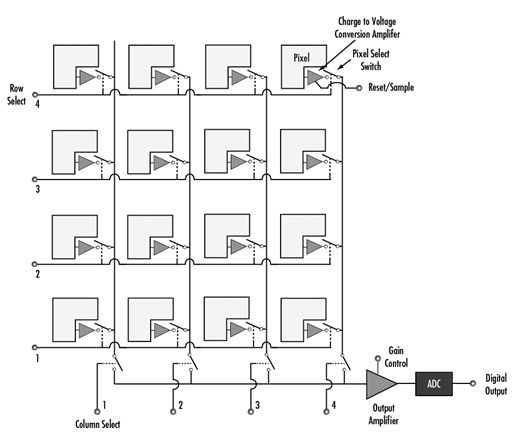
CMOS Sensor Design
CMOS Sensor Design and Operation
The multiplexing configuration of a CMOS sensor is often paired with an electronic rolling shutter. However, with additional transistors at the pixel level, a global shutter can be implemented, allowing all pixels to be exposed simultaneously and then read out sequentially.
Due to the CMOS sensor's multilayer fabrication process, microlenses cannot be placed directly over the chip, which reduces its light collection efficiency. This lower efficiency, combined with pixel-to-pixel variation, results in a lower signal-to-noise ratio and reduced overall image quality when compared to CCD sensors.
How Does a CMOS Sensor Work?
In a camera system, the image sensor receives incoming light focused through a lens. Depending on whether the sensor is CMOS or CCD, the camera system processes the data into either a digital signal or a voltage.
For CMOS sensors, the process begins with the conversion of photons into electrons, which are then turned into voltage and finally converted into a digital value using an on-chip ADC (Analog-to-Digital Converter).
Camera System Design and Function
The design and components of a digital camera vary depending on the manufacturer. The main purpose of this design is to convert light into a digital signal, which can then be processed for further enhancements or user-defined actions.
Consumer-level cameras typically include additional components such as memory storage for images, LCD screens, switches, and control knobs. In contrast, machine vision cameras generally do not have these features, as they are designed for industrial or automated applications where image processing is the primary focus.
CMOS Sensor Types
There are two main types of CMOS sensors: Active Pixel Sensors (APS) and Passive Pixel Sensors (PPS). Here's a brief overview of each type:
- Active Pixel Sensor (APS): This type uses active components (transistors) for each pixel, allowing for better control and higher performance in terms of signal processing and image quality.
- Passive Pixel Sensor (PPS): In this type, the pixel components are simpler, with less active circuitry, leading to lower power consumption but also lower performance compared to APS.
Active Pixel Sensor (APS)
An Active Pixel Sensor (APS) is a type of image sensor made up of an array of individual pixel sensors. Each pixel in this sensor contains an amplifier and a photodetector, which help capture and process light into electrical signals.
The CMOS APS is the most widely used variant due to its excellent performance and wide range of applications in devices like DSLRs, digital cameras, and more.
Manufactured using the CMOS process, the CMOS APS is often referred to as the CMOS Active Pixel Sensor. While it shares similarities with CCD (Charge Coupled Device) sensors, both are classified as active pixel image sensors, but the APS typically offers advantages in power consumption and integration, making it more popular in modern digital imaging devices.
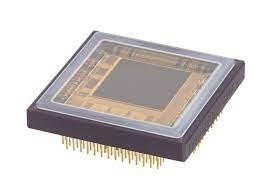
Active Pixel Sensor
CMOS Active Pixel Sensor (APS)
The CMOS Active Pixel Sensor (APS) works by using a photodetector to capture light and convert it into an electrical signal. This signal is then amplified by various transistors and transmitted through fixed wiring. CMOS APS is widely used in applications such as motion capture cameras, X-ray imaging, web cameras, endoscopy cameras, digital radiography, and more.
Passive Pixel Sensor (PPS)
In a Passive Pixel Sensor (PPS), each pixel contains an access transistor and a photodiode. The pixels are arranged in a two-dimensional grid, where the access enable wire is shared by all pixels in the same row, and the output wire is shared across the column.
Each column end is connected to an amplifier. However, PPS has several limitations, including slow readout speeds, poor scalability, and high noise levels. To overcome these issues, adding an amplifier to each pixel can help improve performance.
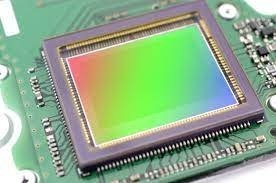
Passive Pixel Sensor
Passive Pixel CMOS Sensors
Passive Pixel CMOS sensors use photo sites to convert photons into voltage. However, one of the major disadvantages of this type of sensor is the noise generated during the image development process, which can affect image quality.
CMOS Sensor IC: OV7670 Camera Module
One of the most widely used CMOS sensor ICs is the OV7670 camera sensor module. This highly sensitive, low-voltage, and compact CMOS image sensor module is designed to capture and process images. Available with various pin configurations from different manufacturers, the OV7670 IC provides both windowed 8-bit and full-frame images in different formats.
The OV7670 module includes several key components, such as:
- Image sensor array
- A/D converter
- Timing generator
- Analog signal processor
- Image scaler
- DSP (Digital Signal Processor)
- Test pattern generator
- Digital video port
- LED indicators
This image sensor can be controlled using the SCCB (Serial Camera Control Bus), which is an I2C interface with a maximum clock frequency of 400 kHz.
Difference Between CMOS and CCD Sensors
Here’s a comparison of the CMOS sensor and CCD sensor based on various aspects:
| CMOS Sensor | CCD Sensor |
|---|---|
| Type: Metal oxide semiconductor chip, converts light into electrical signals. | Type: Charge-coupled device, used to transmit electrically charged signals. |
| Types: Active pixel and passive pixel. | Types: Full-Frame, Frame-Transfer, and Interline-Transfer. |
| Power Consumption: Low power consumption. | Power Consumption: Moderate to high power consumption. |
| Complexity: Moderate complexity. | Complexity: Low complexity. |
| Resolution: Available from low to high resolution. | Resolution: Available from low to high resolution. |
| Uniformity: Low uniformity. | Uniformity: High uniformity. |
| Dynamic Range: Moderate dynamic range. | Dynamic Range: Low dynamic range. |
| Noise Level: Moderate to high noise level. | Noise Level: Low noise level. |
| Fill Factor: Moderate fill factor. | Fill Factor: High fill factor. |
| Signal: Digital chip signal. | Signal: Analog chip signal. |
| Cost: Less expensive to design; fabricated on standard Si production lines. | Cost: More expensive to manufacture. |
| Applications: Used in a wide range of applications, from industrial automation to traffic control. | Applications: Primarily used in hand-held devices, surveillance cameras, and desktop video cameras. |
Advantages of CMOS Sensors
CMOS sensors offer several key benefits, including:
- Low Power Consumption: CMOS sensors are more power-efficient compared to other types.
- Cost-Effective: These sensors are less expensive to produce.
- Lower Dark Noise: This leads to more reliable image quality, especially in low-light conditions.
- Compact Design: The readout logic can be integrated directly onto the chip, allowing for smaller camera sizes.
- Flexible Readout: Direct addressing of individual pixels provides greater flexibility, more storage options, and limited scanning possibilities.
- Higher Sensitivity in NIR (Near-Infrared): CMOS sensors perform better in the NIR range.
- High Frame Rates: CMOS sensors can achieve faster frame rates compared to CCD sensors.
- Reduced Blooming: Blooming (light spill) is significantly minimized.
- Good HD Video Quality: CMOS sensors are excellent for producing high-definition videos.
- Versatility: Widely used in devices like smartphones, tablets, and many other applications.
- Better Performance: CMOS imagers generally offer better performance in various use cases.
Disadvantages of CMOS Sensors
Despite their advantages, CMOS sensors have a few drawbacks:
- Susceptibility to Noise: These sensors can be more prone to noise, sometimes resulting in grainy images.
- Light Requirement: CMOS sensors typically need more light for better image enhancement.
- Individual Pixel Conversion: Each pixel performs its own conversion, which can affect the uniformity and quality of the image.
- Lower Image Homogeneity: The consistency and overall quality of the image can sometimes be lower compared to other sensor types.
Applications of CMOS Sensors
CMOS sensors are used in a wide range of fields, including:
- Marine: For imaging and navigation.
- Automotive: In systems like parking assistance and cameras.
- Manufacturing: Used in machine vision and quality control.
- Aviation: For imaging and surveillance systems.
- Healthcare: In medical imaging devices and diagnostic tools.
- Astronomy: In telescopes and other space exploration applications.
- Medical & Digital Photography: Used in medical imaging and consumer digital cameras.
- High-Resolution Cameras: CMOS sensors are essential in modern high-resolution photography and video.
- Augmented Reality: Advanced CMOS sensors are used in AR devices.
- Computational Photography: For capturing images with enhanced computational processing.
- Biomedical Imaging: In diagnostic equipment and imaging tools.
- Digital Healthcare: Used in wearable health-monitoring devices and medical applications.
Summary
CMOS sensors are versatile, cost-effective, and power-efficient components widely used across various industries. They are known for their flexibility, good performance in high-definition video, and higher sensitivity in certain light ranges. While they do have some limitations in terms of noise and image quality, their applications span across everything from consumer electronics to advanced medical and scientific fields.
Question for You: What is the difference between CMOS and CCD image sensors?
Related Articles
Diode Dynamics: Real-World Behavior in Fast Power and RF Circuits

Christopher Anderson
Christopher Anderson has a Ph.D. in electrical engineering, focusing on power electronics. He’s been a Senior member of the IEEE Power Electronics Society since 2021. Right now, he works with the KPR Institute of Engineering and Technology in the U.S. He also writes detailed, top-notch articles about power electronics for business-to-business electronics platforms.
Subscribe to JMBom Electronics !