

 All Products


Guide to RTX A5000 Graphics Card
 Dec 29, 2025
 606
606Catalog
What Is the RTX A5000 Graphics Card?How Does the RTX A5000 Graphics Card Work?RTX A5000 Features & SpecificationsRTX A5000 Graphics Card ArchitectureRTX A5000 Graphics Card Architecture ComponentsRTX A5000 Graphics Card SoftwareRTX A5000 vs. RTX 5000 AdaAdvantagesDisadvantagesRTX A5000 ApplicationsWhat Is the RTX 5000 Ada Graphics Card?Related ArticlesNVIDIA RTX is a professional visual computing platform developed by NVIDIA. It is widely used not only in high-performance PCs for gaming, but also in professional workstations for creating complex, large-scale models across industries such as product design, architecture, energy exploration, scientific visualization, and video and film production. NVIDIA has released multiple RTX series over the years, including the 20-, 30-, and 40-series GPUs.
Among these, the NVIDIA RTX A5000 is a professional-grade graphics card introduced in 2021. It represents an important advancement in NVIDIA’s lineup of professional GPUs, delivering a powerful and flexible solution for demanding workloads. This article explores the RTX A5000 in detail, including its architecture, how it works, and its key application areas.
What Is the RTX A5000 Graphics Card?
The NVIDIA RTX A5000 is a professional graphics card designed for high-performance computing, advanced rendering, artificial intelligence, and a wide range of HPC workloads. It offers a strong and versatile solution for many professional applications. Built on NVIDIA’s Ampere architecture, the RTX A5000 delivers significant performance improvements compared to previous generations.
This GPU is well suited for engineers, designers, researchers, and creative professionals who require reliable and powerful graphics performance. Choosing the right GPU for different workloads requires careful evaluation of performance, efficiency, and cost, and the RTX A5000 strikes a well-balanced combination of all three.
Key features of the RTX A5000 include 8,192 CUDA cores, second-generation RT Cores, third-generation Tensor Cores, and 24 GB of GDDR6 memory. Together, these specifications provide the performance, stability, and processing power needed to handle demanding professional projects with confidence.
How Does the RTX A5000 Graphics Card Work?
The NVIDIA RTX A5000 graphics card operates around its core architecture and key components to handle highly parallel computing tasks. It combines thousands of GPU cores, dedicated processing units, and high-speed memory to efficiently perform workloads such as AI inference, 3D rendering, scientific computing, and simulations.
The working process of the RTX A5000 can be explained step by step:
First, the system sends data to the RTX A5000, such as a game scene, a 3D model, or datasets for machine learning tasks. This data is temporarily stored in the GPU’s high-speed 24 GB GDDR6 video memory (VRAM), allowing the GPU to access information quickly and reduce processing delays.
Next, the 8,192 CUDA cores process the data in parallel. This massive parallelism enables the GPU to handle many calculations at the same time, such as pixel shading, geometry processing, or complex AI computations.
The Tensor Cores are specialized units designed to accelerate AI and deep-learning workloads. They significantly speed up tasks like training and inference of machine learning models by performing optimized matrix calculations. At the same time, the RT Cores handle real-time ray tracing, generating realistic lighting, reflections, and shadows by simulating how light interacts with objects in a scene.
Once the RTX A5000 processes the 3D models, it applies textures, lighting, and shadows to produce the final 2D image. For scientific or AI workloads, the GPU performs the required computations and generates the results accordingly. The final output—such as rendered images or video frames—is then transmitted to the display through HDMI or DisplayPort, while computed results are sent back to the CPU and stored on the system.
In summary, the RTX A5000 receives input data, processes it using thousands of specialized cores, and delivers the final output efficiently. Its high processing power and large memory capacity make it ideal for demanding tasks such as AI model training, simulations, and high-quality 3D rendering.
RTX A5000 Features & Specifications
The key features and specifications of the NVIDIA RTX A5000 are outlined below:
- The RTX A5000 is a professional-grade graphics card developed by NVIDIA for demanding workloads.
- It features ECC (Error Correction Code) memory, which improves data accuracy and reliability—an essential requirement for professional and mission-critical applications.
- NVLink support allows two RTX A5000 cards to be connected, enabling higher performance and shared memory scaling.
- PCIe Gen 4 support delivers faster data transfer speeds compared to PCIe Gen 3.
- Virtualization support enables a single workstation to be divided into multiple high-performance virtual workstations using NVIDIA RTX vWS software.
Architecture and Core Configuration:
- Based on NVIDIA Ampere architecture
- 8,192 CUDA Cores
- 64 second-generation RT Cores
- 256 third-generation Tensor Cores
Memory and Performance:
- 24 GB GDDR6 GPU memory with ECC
- 384-bit memory interface
- Memory bandwidth up to 768 GB/s
- Boost clock speed up to 1.695 GHz
- Total power consumption (TDP): 230 W
Connectivity and Expansion:
- Four DisplayPort 1.4a outputs
- PCI Express Gen 4 x16 interface
- Two-way, low-profile NVLink support
Virtualization and Compute Performance:
- Supports NVIDIA RTX vWS, vApps, and vPC virtualization solutions
- Single-precision (FP32) performance: up to 27.8 TFLOPS
- RT Core performance: up to 54.2 TFLOPS
- Tensor Core performance: up to 222.2 TFLOPS
Overall, the RTX A5000 combines strong compute power, advanced memory features, and enterprise-grade reliability, making it well suited for professional visualization, AI, simulation, and virtualization workloads.
RTX A5000 Graphics Card Architecture
The NVIDIA RTX A5000 graphics card is built on the Ampere architecture, NVIDIA’s second-generation RTX platform. This architecture brings major performance and efficiency improvements compared to earlier GPU generations. It is specifically designed to meet the demands of professional workloads such as AI and machine learning, 3D rendering, scientific simulations, video production, and advanced visualization.
The RTX A5000 is also well suited for complex tasks that require a combination of large memory capacity, real-time graphics processing, and high computational performance. Key enhancements introduced with the Ampere architecture include improved AI acceleration, higher overall compute throughput, and more advanced ray tracing capabilities, making the RTX A5000 a powerful solution for modern professional applications.
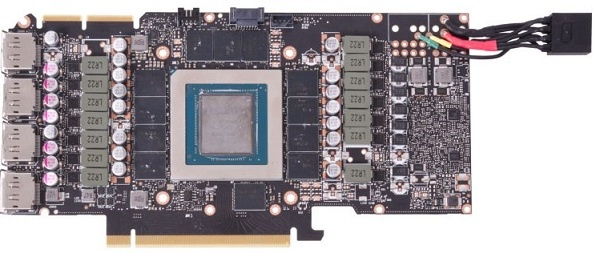
RTX A5000 Graphics Card Architecture
RTX A5000 Graphics Card Architecture Components
The NVIDIA RTX A5000 graphics card is built on the Ampere architecture and integrates multiple advanced components that work together to deliver high performance for professional workloads. These components include CUDA Cores, third-generation Tensor Cores, second-generation RT Cores, Streaming Multiprocessors (SMs), a high-bandwidth memory subsystem, NVLink support, a PCIe Gen 4.0 interface, NVENC/NVDEC engines, and NVIDIA’s RT pipeline. Each of these elements plays a key role in the card’s overall performance and efficiency.
CUDA Cores
The RTX A5000 features 8,192 CUDA cores, which serve as the primary computing units of the GPU. These cores handle general-purpose and highly parallel workloads such as AI training, simulations, data processing, and video rendering. Their massive parallel processing capability makes them ideal for demanding professional applications.
Tensor Cores (3rd Generation)
Tensor Cores are specialized processing units designed to accelerate AI and machine learning workloads. The third-generation Tensor Cores in the RTX A5000 support mixed-precision operations such as INT8, FP16, and TF32, enabling faster training and inference for deep learning models while maintaining high accuracy.
RT Cores (2nd Generation)
Second-generation RT Cores are optimized for real-time ray tracing. They accelerate complex calculations related to reflections, shadows, and realistic lighting by handling tasks such as bounding volume hierarchy (BVH) traversal and ray–triangle intersection testing. Compared to first-generation RT Cores, they offer significantly improved ray-tracing performance.
Streaming Multiprocessors (SMs)
The RTX A5000 includes 104 Streaming Multiprocessors (SMs). Each SM contains CUDA Cores, Tensor Cores, and control units that execute multiple threads in parallel. By managing multiple warps of threads simultaneously, SMs ensure high throughput across a wide range of tasks, from geometry processing and rendering to AI and scientific workloads.
Memory Subsystem
The memory subsystem is responsible for fast and efficient data storage and access. The RTX A5000 is equipped with 24 GB of GDDR6 memory and a 384-bit memory interface, delivering up to 768 GB/s of memory bandwidth. This high bandwidth allows both CUDA and Tensor Cores to access data quickly, improving performance across rendering, simulation, and AI tasks.
NVIDIA NVLink Support
NVLink enables multiple GPUs to communicate directly with each other, creating a powerful multi-GPU system. The RTX A5000 supports NVLink, allowing two compatible GPUs to share memory and workloads efficiently. This feature is particularly valuable for AI, high-performance computing (HPC), and large-scale data processing, where larger models and datasets are required.
PCIe Gen 4.0 Interface
The PCIe Gen 4.0 interface provides high-speed communication between the GPU and the CPU or motherboard. With up to 16 GT/s per lane and a total bandwidth of up to 64 GB/s on an x16 connection, PCIe Gen 4.0 ensures smooth data transfer for data-intensive applications such as AI/ML, scientific computing, and advanced 3D rendering.
NVENC / NVDEC (Video Encoder and Decoder)
The RTX A5000 includes dedicated hardware for video encoding and decoding. NVENC accelerates video encoding in formats such as H.264, HEVC (H.265), and VP9, making it ideal for video rendering, streaming, and transcoding. NVDEC handles hardware-accelerated decoding for formats including H.264, HEVC, and AV1, enabling smooth video playback and efficient media processing.
NVIDIA RT Pipeline
The NVIDIA RT pipeline accelerates ray tracing by managing operations such as ray casting, surface intersections, reflections, and refractions. This pipeline integrates RT Cores with CUDA Cores to optimize real-time ray tracing workflows, delivering realistic visuals with high performance for professional visualization and rendering applications.
Power Management and Thermal Solutions
The RTX A5000 features optimized power management and advanced cooling solutions to ensure stable and reliable operation under high-performance workloads. With a thermal design power (TDP) of approximately 230 W, the card is engineered to deliver consistent performance while maintaining efficient power usage and effective heat dissipation.
NVIDIA CUDA, OptiX, and Vulkan Support
The RTX A5000 fully supports NVIDIA’s software libraries and APIs for a wide range of professional workloads, including machine learning, ray tracing, and scientific computing. NVIDIA CUDA provides a widely used general-purpose GPU computing platform for AI, scientific research, and data processing. NVIDIA OptiX is a ray-tracing framework designed for AI-accelerated rendering and advanced visual effects. Vulkan is a high-performance, open graphics API that enables efficient and scalable rendering for demanding graphics applications.
Display Outputs
The RTX A5000 is equipped with four DisplayPort 1.4a outputs, allowing connection to high-end professional monitors. This configuration supports multi-monitor setups or large-format displays, enabling efficient workflows for content creation and visualization. The display outputs support up to 8K resolution, High Dynamic Range (HDR), and multiple 4K displays, making the card suitable for applications that require high visual accuracy and detail.
RTX A5000 Graphics Card Software
The RTX A5000 is supported by a comprehensive software ecosystem that includes drivers, development tools, and utilities designed to ensure optimal performance and efficiency. Key software components include:
- NVIDIA Drivers – Essential for ensuring system compatibility, stability, and peak performance across professional applications.
- NVIDIA Control Panel – Provides control over graphics performance, display settings, and application-specific configurations.
- CUDA Toolkit – A complete set of development tools that enables developers to build applications that leverage the GPU’s parallel processing power.
- NVIDIA Nsight Tools – Used by developers to profile, debug, and optimize GPU-accelerated applications.
- TensorRT and cuDNN – Libraries that accelerate AI inference and deep learning workloads, improving performance and efficiency.
- NVIDIA vGPU Software – Enables the RTX A5000 to be used in virtualized environments, allowing multiple virtual machines to share GPU resources.
- NVIDIA Omniverse – A GPU-powered platform for real-time 3D design, simulation, and collaborative workflows.
Together, these tools allow professionals and developers to fully utilize the RTX A5000 for demanding tasks such as 3D rendering, AI development, scientific simulations, and other compute-intensive workloads.
RTX A5000 vs. RTX 5000 Ada
The RTX A5000 and RTX 5000 Ada are both high-end professional GPUs from NVIDIA. However, the RTX 5000 Ada is the newer, upgraded model built on the Ada Lovelace architecture, while the RTX A5000 is based on the Ampere architecture. As a result, the RTX 5000 Ada delivers substantial performance improvements across ray tracing, AI workloads, and graphics-intensive applications.
The RTX 5000 Ada features third-generation RT Cores, fourth-generation Tensor Cores, and a significantly higher number of CUDA cores, enabling faster rendering and AI processing compared to the RTX A5000. It also offers a larger memory capacity, with 32 GB of GDDR6 ECC memory—8 GB more than the RTX A5000—making it better suited for large datasets and complex professional workflows.
A comparison between the RTX A5000 and RTX 5000 Ada is shown below:
| Feature | RTX A5000 | RTX 5000 Ada |
|---|---|---|
| Market Position | Professional, high-performance GPU for AI, scientific computing, and CAD workloads | Professional GPU for advanced rendering, graphics-intensive, and AI applications |
| Architecture | Ampere | Ada Lovelace |
| CUDA Cores | 8,192 | 12,800 |
| Memory | 24 GB GDDR6 ECC | 32 GB GDDR6 ECC |
| Memory Interface | 384-bit | 256-bit |
| Memory Bandwidth | 768 GB/s | 576 GB/s |
| Tensor Cores | 256 | 400 |
| RT Cores | 64 | 100 |
| FP32 Performance | ~30.5 TFLOPS | ~63.1 TFLOPS |
| Ray Tracing Performance | Strong, but behind newer generations | Significantly improved over RTX A5000 |
| AI Performance | Solid, but less efficient than newer GPUs | Substantially faster than RTX A5000 |
In summary, while the RTX A5000 remains a powerful and reliable professional GPU, the RTX 5000 Ada offers major gains in performance, efficiency, and AI acceleration, making it the better choice for users who need the latest architecture and higher processing capability for modern workloads.
Advantages
The key advantages of the NVIDIA RTX A5000 include the following:
- The RTX A5000 offers strong overall performance, making it well suited for professional workloads.
- It delivers high compute power and efficiently handles complex calculations and large datasets.
- Third-generation Tensor Cores accelerate AI and machine learning tasks, enabling faster training and inference for neural networks.
- Enhanced RT Cores support real-time ray tracing, producing highly realistic visuals for design, visualization, and rendering applications.
- NVLink support enables multi-GPU configurations, improving performance in data centers and other demanding computing environments.
- The PCIe Gen 4 interface provides high bandwidth and fast data transfer, which is essential for data-intensive and complex workloads.
Disadvantages
Despite its strengths, the RTX A5000 also has some limitations:
- It consumes more power than some lower-tier professional GPUs.
- It is more expensive than models such as the RTX A30.
- It may not be ideal for extremely large datasets or the most advanced AI and machine learning models.
- In some ML and AI workloads, the performance improvement over the RTX A30 may be limited, as both GPUs use the same generation of Tensor Cores.
- Some older applications may require driver updates for full compatibility, and newer GPUs can sometimes be harder to source compared to previous-generation models.
RTX A5000 Applications
The NVIDIA RTX A5000 is widely used across a broad range of professional and technical fields. Its key applications include the following:
- AI Development and Training The RTX A5000 is used for AI and machine learning development, leveraging its 256 Tensor Cores to accelerate model training and inference workloads.
- High-Performance Computing (HPC) It is well suited for scientific simulations, modeling, and visualization tasks, enabling researchers to process large datasets and accelerate complex computations.
- Creative and Media Workflows The RTX A5000 powers creative workflows in media, entertainment, and design, including video production, animation, and visual effects.
- Edge AI, XR, and Robotics The GPU is also used in emerging areas such as edge AI, extended reality (XR), and robotics, where its performance supports the development and deployment of intelligent systems.
- Virtual Workstations When paired with NVIDIA RTX vWS software, the RTX A5000 can create multiple high-performance virtual workstation instances, allowing remote users to access GPU power for demanding professional tasks.
- Professional Visualization and Design It is commonly used in 3D rendering, content creation, AI/ML workflows, and CAD/CAM applications, making it a versatile choice for professional environments.
- Data Science and Analytics The RTX A5000 efficiently handles large datasets and complex calculations, making it suitable for data scientists and analytical workloads.
- Rendering and Ray Tracing The GPU delivers fast and realistic rendering and ray tracing in applications such as Autodesk Maya, 3ds Max, Blender, and similar professional tools.
- Scientific Research and Engineering It supports advanced visualization and simulation tasks in scientific and engineering fields.
- Collaborative 3D Design and Manufacturing Its performance makes it well suited for collaborative 3D design workflows, manufacturing processes, and computer-aided engineering (CAE) and design (CAD).
Overall, the RTX A5000 is a professional, high-performance GPU that combines advanced ray tracing, professional graphics rendering, and AI acceleration. It provides a strong and flexible foundation for demanding workloads across industries such as CAD, CAE, scientific research, and content creation.
What Is the RTX 5000 Ada Graphics Card?
The RTX 5000 Ada is a next-generation professional graphics card from NVIDIA based on the Ada Lovelace architecture. It is designed as the successor to the RTX A5000 and delivers significantly higher performance, efficiency, and AI capability. With more CUDA cores, newer-generation RT and Tensor Cores, and up to 32 GB of GDDR6 ECC memory, the RTX 5000 Ada is optimized for advanced rendering, AI workloads, simulation, and high-end professional visualization.
In short, the RTX 5000 Ada represents NVIDIA’s newer, more powerful professional GPU platform, built for modern, compute-intensive workflows that demand higher performance and scalability.
Related Articles
Diode Dynamics: Real-World Behavior in Fast Power and RF Circuits

Christopher Anderson
Christopher Anderson has a Ph.D. in electrical engineering, focusing on power electronics. He’s been a Senior member of the IEEE Power Electronics Society since 2021. Right now, he works with the KPR Institute of Engineering and Technology in the U.S. He also writes detailed, top-notch articles about power electronics for business-to-business electronics platforms.
Subscribe to JMBom Electronics !