

 All Products


What are Magnetic Materials
 Mar 19, 2026
 569
569Catalog
What Are Magnetic Materials?PropertiesHow Do Magnetic Materials Work?Magnetic Materials: TypesNeodymium MagnetsSamarium CobaltMagnetic Materials vs. Non-Magnetic MaterialsProperty Comparison of Common Magnetic MaterialsApplications of Magnetic MaterialsKey Industrial & Engineering ApplicationsSpecialized & Emerging ApplicationsFinal ThoughtRelated ArticlesMaterials and substances composed of charged particles—such as electrons and protons—exhibit diverse characteristics. When magnetized by an external magnetic field, certain materials display magnetic properties, and these are defined as magnetic materials. They possess either induced or permanent magnetic moments within a magnetic field.
The conventional method for investigating the magnetic properties of these materials involves placing the specimen in a standardized magnetic field and then varying the field strength.
Magnetic materials serve as indispensable components in modern technology, playing a pivotal role in core devices including transformers, electric motors, and generators.
What Are Magnetic Materials?
Magnetic materials are defined as materials that become magnetized when exposed to an external magnetic field. These substances also acquire magnetization when attracted by a magnet. Common examples include iron, cobalt, and nickel.
These materials are classified into two categories: magnetically hard materials and magnetically soft materials.
Magnetically hard materials require a strong external magnetic field, typically produced by an electromagnet, to become magnetized. They are primarily used in the manufacture of permanent magnets, which are usually alloys containing variable proportions of iron, nickel, aluminum, cobalt, and rare-earth elements such as samarium, neodymium, and dysprosium.
Magnetically soft materials can be magnetized extremely easily, although the induced magnetism is only temporary. For example, if you run a permanent magnet along a screwdriver or a nail, the tool will become temporarily magnetized and generate a weak magnetic field, as a large number of iron atoms are temporarily aligned in the same direction by the external magnetic field.
Properties
Magnetic material properties represent one of the most fundamental concepts in physics. The primary types of magnetic behavior include paramagnetism, ferromagnetism, and antiferromagnetism, which are explained below.
Paramagnetism refers to a form of magnetism in which certain materials are weakly attracted by an externally applied magnetic field. These materials generate an internal induced magnetic field in the same direction as the applied field. In paramagnetic substances, unpaired electrons are randomly oriented.
Ferromagnetism describes the phenomenon in which materials such as iron become magnetized when exposed to an external magnetic field and retain their magnetization under that field. In ferromagnetic materials, the unpaired electrons align cooperatively.
Antiferromagnetism is a type of magnetic ordering in which the magnetic moments of adjacent atoms or ions align in opposite directions, resulting in a net magnetic moment of zero. This behavior arises primarily from exchange interactions between neighboring atoms or ions, which favor antiparallel alignment to minimize the system’s energy. Antiferromagnetic materials typically display this magnetic ordering below a characteristic temperature known as the Néel temperature. Above this temperature, the material transitions to paramagnetic behavior and loses its antiferromagnetic properties.
How Do Magnetic Materials Work?
Magnetic materials contain tiny localized regions called magnetic domains, in which magnetic moments align along a fixed direction; these domains are the primary drivers of the unique magnetic behavior exhibited by such materials. The total energy of a magnetic material is governed by three key components: magnetocrystalline anisotropy energy, exchange energy, and magnetostatic energy.
When the physical size of a magnetic material is decreased, the number of magnetic domains within the material increases. This reduction in magnetostatic energy comes at the cost of higher exchange energy and anisotropy energy, as more domain walls are formed. Ultimately, the size and configuration of these magnetic domains determine the overall magnetic properties and performance of the material.
For materials composed of particles with diameters smaller than the critical superparamagnetic diameter, the magnetic moment remains unstable and fluctuates randomly. Conversely, when particle diameters fall between the critical superparamagnetic threshold and the single-domain size limit, the magnetic moment stabilizes and maintains consistent alignment.
Magnetic Materials: Types
A wide range of magnetic materials are commercially available, and the key types are explored in detail below.
Paramagnetic Materials
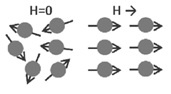
These materials exhibit only weak attraction to external magnets; common examples include tin, magnesium, aluminum, and several other metals. Paramagnetic materials have a small but positive relative permeability — for instance, the relative permeability of aluminum is approximately 1.00000065.
They only become magnetized when placed in a sufficiently strong external magnetic field, and their magnetization aligns with the direction of the applied field.
When exposed to a strong external magnetic field, the permanent magnetic dipoles within these materials reorient themselves parallel to the applied field, generating a small positive magnetization. Since full parallel alignment of the dipoles rarely occurs under standard conditions, the overall magnetization of paramagnetic materials remains extremely low.
Diamagnetic Materials
Ferromagnetic Materials
Materials that are strongly attracted by an external magnetic field are classified as ferromagnetic materials. Prominent examples include iron, nickel, cobalt, and various steels.
Ferromagnetic materials possess extremely high permeability, typically ranging from several hundred up to several thousand. This property enables them to readily absorb and concentrate magnetic flux lines when exposed to a magnetic field.
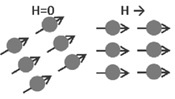
Within ferromagnetic materials, magnetic dipoles spontaneously organize into distinct regions known as magnetic domains. Within each domain, the dipoles are perfectly aligned, endowing the domain with a strong magnetic field. In an unmagnetized state, however, these domains are arranged randomly. As a result, the magnetic fields of individual domains largely cancel one another out, leading to a net magnetic moment of zero for the material as a whole, and it does not behave like a permanent magnet.
Ferromagnetic Materials
Ferromagnetic Materials & Magnetic Raw Materials
When an external magnetic field is applied to ferromagnetic materials, their magnetic domains reorient to align with the external field, generating a powerful internal magnetic field. Even after the external field is removed, most domains retain their alignment along the original field direction.
As a result, the material retains a persistent magnetic field even without an external stimulus — this defining property is what makes ferromagnetic materials ideal for manufacturing the permanent magnets we use in daily life. Highly ferromagnetic substances like iron, nickel, cobalt, and neodymium are the primary raw materials for permanent magnet production.
For more in-depth details about ferromagnetic materials, refer to the attached link.
Magnetic Raw Materials
Permanent magnets manufactured worldwide are crafted from a diverse range of materials, each with unique performance characteristics. The most common magnetic raw materials include alnico, flexible rubber magnets, ferrites, samarium cobalt, and neodymium magnets, with detailed breakdowns provided below.
Ferrites
Ferrites are a specialized class of magnetic materials that fall between conventional ferromagnetic and non-ferromagnetic substances in terms of magnetic behavior. Composed of fine ferromagnetic particles with high permeability, these materials are bonded together using a polymer resin matrix.
While ferrites produce ample magnetization for most practical applications, their magnetic saturation level is lower than that of pure ferromagnetic materials.

Ferrites
Neodymium Magnets
Neodymium (Nd), with the atomic number 60, is a rare-earth element. It was discovered in 1885 by the Austrian chemist Carl Auer von Welsbach.
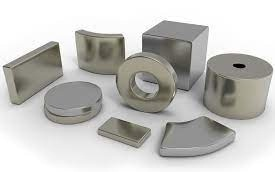
When alloyed with iron and boron, along with trace amounts of other elements such as praseodymium and dysprosium, neodymium forms the ferromagnetic compound Nd₂Fe₁₄B. This alloy is the basis for the strongest type of permanent magnet currently available.
Neodymium magnets have rapidly replaced other magnetic materials in a wide range of industrial and modern commercial applications, thanks to their exceptional magnetic strength.
Key Characteristics
- Exceptional Strength: They offer the highest magnetic flux density among all permanent magnets.
- Cost-Effectiveness: Despite being rare-earth materials, they offer a compelling performance-to-cost ratio.
- Performance Trade-offs: While extremely strong, they are generally more susceptible to corrosion and demagnetization than some alternative magnetic materials.
Neodymium
Alnico
Alnico is an acronym derived from its three primary constituent elements: aluminum, nickel, and cobalt, which form the core composition of this classic magnetic material.
Contrary to common misconceptions, alnico magnets are not stronger than rare-earth magnets; instead, they boast exceptional thermal stability and excellent resistance to demagnetization, making them highly durable permanent magnets for harsh operating environments.
Alnico magnets have long been a staple permanent magnet solution, widely used in motors, loudspeakers, generators, and other electrical equipment before the widespread adoption of rare-earth magnets, and still remain in use for many specialty applications today.

Alnico
Samarium Cobalt
Samarium cobalt magnets, commonly abbreviated as SmCo, were first developed in the early 1970s by the U.S. Air Force Materials Laboratory.
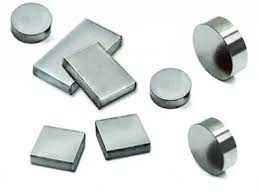
SmCo is a high-performance magnetic material formulated from an alloy consisting of rare-earth samarium, hard cobalt metal, and trace additions of other elements such as iron, hafnium, copper, praseodymium, and zirconium.
Classified as a rare-earth magnet alongside neodymium magnets, samarium cobalt magnets fall into the same rare-earth element group as neodymium-based magnets, which gives them exceptional magnetic properties suitable for demanding engineering applications.
Samarium Cobalt
Magnetic Materials vs. Non-Magnetic Materials
The core differences between magnetic and non-magnetic materials are outlined in the comparative table below, highlighting their defining properties and behaviors.
| Magnetic Materials | Non-Magnetic Materials |
|---|---|
| Materials that are attracted by an external magnet are classified as magnetic materials. | Materials that show no attraction to an external magnet are defined as non-magnetic materials. |
| Common examples include iron, cobalt, and nickel. | Common examples include plastic, rubber, feathers, stainless steel, paper, mica, silver, gold, and leather. |
| Their magnetic dipoles or domains can align in parallel or anti-parallel arrangements when exposed to an external magnetic field, meaning they respond actively to magnetic fields. | Their magnetic moments are randomly oriented at all times, so the magnetic effects of individual domains cancel each other out completely. As a result, these materials show no response to external magnetic fields. |
| These materials can be readily magnetized by an external magnet, making them ideal for manufacturing permanent magnets. | These materials cannot be magnetized by an external magnet under any standard conditions, so they never exhibit magnetic properties. |
Property Comparison of Common Magnetic Materials
The table below summarizes key performance and physical characteristics of the most widely used magnetic materials for quick reference.
| Material Type | Composition | Maximum Operating Temperature | Temperature Coefficient | Density (g/cm³) |
|---|---|---|---|---|
| Ferrite | Iron oxide + ceramic binders | 180 °C | -0.02% | 5.0 g/cm³ |
| Neodymium (NdFeB) | Primarily neodymium, iron, and boron | 80 °C | -0.11% | 7.4 g/cm³ |
| Alnico | Primarily aluminum, nickel, iron, and cobalt | 500 °C | -0.2% | 7.3 g/cm³ |
| Magnetic Rubber | Barium/strontium ferrite powder + PVC or synthetic rubber | 50 °C | 0.2% | 3.5 g/cm³ |
| Samarium Cobalt (SmCo) | Primarily samarium and cobalt | 350 °C | -0.11% | 8.4 g/cm³ |
Applications of Magnetic Materials
Magnetic materials are indispensable across nearly every modern industry, with versatile applications spanning daily life, industrial production, cutting-edge science, and national defense. Their core use cases are detailed below:
Key Industrial & Engineering Applications
- Power Generation & Distribution: Used to generate, transmit, and regulate electricity in electrical equipment; critical for manufacturing transformers, motors, generators, and other core power components.
- Electronic & Communication Technology: Integrated into magnetic components, microwave tubes, signal intensifiers, and communication filters to enable reliable signal transmission and processing.
- Magnetic Storage Devices: Form the foundation of data storage systems, including hard disk drives (HDDs), floppy disks, magnetic tapes, and audio/video recording media.
- Sensor Technology: Utilized to produce high-sensitivity magnetic sensors such as Hall-effect sensors, standard magnetic field sensors, and magnetoresistive sensors for detection and monitoring systems.
Specialized & Emerging Applications
- Medical Equipment: Play a vital role in life-saving and diagnostic devices, including MRI machines, cardiac pacemakers, and implantable drug delivery systems.
- National Defense & Military Technology: Deployed in electromagnetic guns, magnetic mines, advanced radar components, and a wide range of military and household electrical appliances.
- Resource Exploration: Applied in mineral prospecting, geological surveys, and deep-sea ocean exploration to locate and analyze subsurface resources.
- Renewable Energy: Essential for clean energy infrastructure, including hydroelectric power plants and wind turbines that convert mechanical energy into electricity.
- Material Separation: Used in magnetic separation processes to efficiently separate magnetic particles from non-magnetic particles in industrial and recycling operations.
- Advanced Scientific Fields: Serve as core materials in cutting-edge technologies across energy, information technology, aerospace, and biomedical engineering.
- In summary, this article has provided a comprehensive overview of magnetic materials — including their core properties, working principles, classification, key differences between magnetic and non-magnetic materials, performance comparisons of common magnetic variants, and real-world applications.
Final Thought
To wrap up our discussion, consider this question: What is a magnet?
Related Articles
Diode Dynamics: Real-World Behavior in Fast Power and RF Circuits

Christopher Anderson
Christopher Anderson has a Ph.D. in electrical engineering, focusing on power electronics. He’s been a Senior member of the IEEE Power Electronics Society since 2021. Right now, he works with the KPR Institute of Engineering and Technology in the U.S. He also writes detailed, top-notch articles about power electronics for business-to-business electronics platforms.
Subscribe to JMBom Electronics !