

 All Products


Superconductor: Types, Materials & Properties
 Dec 26, 2025
 430
430Catalog
What is a Superconductor?Types of SuperconductorsSuperconducting MaterialsDifference Between Semiconductor and SuperconductorApplications of SuperconductorsFAQsExamples of SuperconductorsRelated ArticlesIn the world of materials, there are two broad categories: metals and insulators. Metals, like silver and copper, allow the free flow of electrons, enabling them to carry electric charge efficiently. On the other hand, insulators, such as wood or rubber, restrict the flow of electrons, effectively preventing the passage of electric current.
In the 20th century, advancements in laboratory techniques led physicists to explore how materials behave at temperatures near absolute zero (0 Kelvin). By cooling elements like lead and mercury to these extremely low temperatures, they discovered that these materials could conduct electricity without any resistance. This phenomenon was later observed in various compounds, ranging from ceramics to carbon nanotubes, all of which displayed similar superconducting behavior under certain conditions.
This article offers a general overview of superconductors, including the different types of materials and their fascinating properties.
What is a Superconductor?
Definition: A superconductor is a material that can conduct electricity without any resistance. Unlike ordinary conductors, which offer some resistance to the flow of electric current, superconductors allow the current to pass through them freely, without losing any energy as heat.
At room temperature, most materials—whether compounds or metallic elements—experience some amount of resistance. However, when these materials are cooled to a specific, very low temperature (known as the critical temperature), their electrical resistance drops to zero, enabling them to conduct electricity with perfect efficiency. This property is what makes superconductors unique and valuable in various high-tech applications.
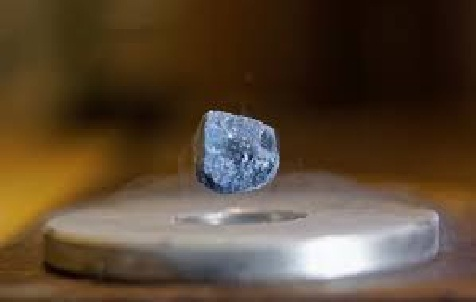
superconductor
Electrons move from one atom to another in certain materials once they reach a critical temperature, making the material superconductive. These materials are used in various fields such as magnetic resonance imaging (MRI) and medical science. Most materials on the market aren't superconductive, so they need to be in a very low energy state to become superconductive. Current research is focused on developing compounds that can become superconductive at higher temperatures.
Types of Superconductors
Superconductors are typically categorized into two types: Type-I and Type-II.
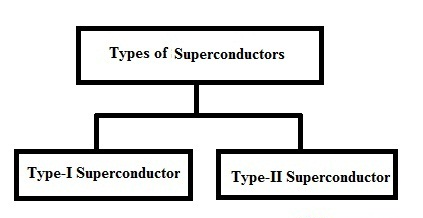
types-of-superconductors
Type-I Superconductor
Type-I superconductors consist of basic conductive materials that are used in various fields, from electrical wiring to microchips in computers. These superconductors lose their superconductivity easily when exposed to a magnetic field above a certain critical value (Hc). Once this happens, they behave like regular conductors. Due to their tendency to lose superconductivity, Type-I superconductors are also called "soft superconductors." They fully obey the Meissner effect, which is the expulsion of magnetic fields. Examples of Type-I superconductors include zinc and aluminum.
Type-II Superconductor
Type-II superconductors lose their superconductivity more gradually when exposed to an external magnetic field. When you look at a graph plotting magnetization against magnetic field, you’ll see that Type-II superconductors slowly lose their superconductivity as the magnetic field increases.
These materials start to lose their superconductivity at a lower magnetic field and completely lose it at a higher critical field. The range between the lower and upper critical magnetic fields is known as the "intermediate" or "vortex" state.
Because Type-II superconductors lose their superconductivity more slowly and not as easily, they are often referred to as "hard superconductors." While they do exhibit the Meissner effect, they don’t do so as completely as Type-I superconductors. Some common examples include niobium nitride (NbN) and barium bismuth oxide (BaBi₃). These superconductors are used in high-field superconducting magnets.
Superconducting Materials
There are many materials that can become superconductors, with metals and semiconductors being some of the original ones (except for mercury). Each material turns into a superconductor at a slightly different temperature.
The main challenge with most of these materials is that they only become superconductive at temperatures close to absolute zero. This means that while you benefit from the lack of electrical resistance, you likely lose much of that benefit due to the energy required to cool them down to such low temperatures in the first place.
For example, a power plant that uses superconducting wires to deliver electricity to your home could potentially save a huge amount of energy by reducing energy losses. However, if you need to cool large parts of the plant, including all the transmission wires, to absolute zero, the energy used for cooling could end up outweighing the energy saved.
Properties of Superconductors
Superconducting materials exhibit several remarkable properties that are crucial for advancing current technology. Ongoing research continues to explore and harness these properties across various fields, as outlined below.
Infinite Conductivity/Zero Electric Resistance
In the superconducting state, the material demonstrates zero electrical resistance. When cooled below its transition temperature, the material’s resistance drops to zero almost instantly. For example, mercury shows zero resistance when cooled below 4K.
Meissner Effect
When a superconductor is cooled below its critical temperature, it expels magnetic fields from within. This phenomenon is known as the Meissner effect.
Transition Temperature
Also known as the critical temperature, this is the temperature at which a material transitions from its normal conducting state to a superconducting state. The material exhibits superconductivity once it is cooled below this critical temperature.
Josephson Current
When two superconductors are separated by a thin insulating layer, a junction with low resistance is formed, allowing Cooper pairs of electrons to tunnel through the insulating barrier. The resulting current from the flow of these Cooper pairs is known as the Josephson current.
Critical Current
When a current flows through a superconducting material, it generates a magnetic field. If the current exceeds a certain threshold, the magnetic field becomes strong enough to disrupt superconductivity, causing the material to return to its normal state. The maximum current a superconductor can carry without losing its superconducting properties is called the critical current.
Persistent Currents
If a superconducting ring is exposed to a magnetic field above its critical temperature and then cooled below this temperature, the current flowing within the ring will continue even after the magnetic field is removed. This occurs due to the ring's self-inductance and the induced current that opposes changes in magnetic flux, as described by Lenz’s law. The continuous flow of current in this superconducting state is known as the persistent current. This current generates a stable magnetic flux within the ring.
Difference Between Semiconductor and Superconductor
| Semiconductor | Superconductor |
|---|---|
| The resistivity of a semiconductor is finite. | The resistivity of a superconductor is zero (perfect conductivity). |
| In semiconductors, electron repulsion leads to finite resistivity. | In superconductors, electron attraction (Cooper pairs) causes the loss of resistivity. |
| Semiconductors do not exhibit perfect diamagnetism. | Superconductors exhibit perfect diamagnetism (Meissner effect). |
| The energy gap of a semiconductor is typically on the order of a few eV. | The energy gap of a superconductor is much smaller, on the order of 10^-4 eV. |
| Flux quantization in semiconductors is in units of 2e. | In superconductors, flux quantization occurs in units of e. |
Applications of Superconductors
Superconductors have a wide range of applications across various industries, including:
- Generators and Particle Accelerators: Superconductors are used in high-performance electromagnets for particle accelerators and energy generation.
- Transportation: Superconducting materials are used in magnetic levitation trains, which can float above tracks and move with minimal friction.
- Electric Motors: Superconductors are employed in high-efficiency motors, enabling better performance with less energy loss.
- Computing: Superconducting materials are used in some advanced computing systems, such as quantum computers.
- Medical: Superconductors are crucial in MRI scanners (Magnetic Resonance Imaging), where they help generate powerful and stable magnetic fields.
- Power Transmission: Superconducting cables can transmit electricity over long distances with no energy loss, unlike conventional conductors.
- Storage Elements: Superconductors are used in memory and storage devices for their low resistance and high performance.
FAQs
- Why do superconductors have to be cold? The cooling is necessary because, at low temperatures, the electrons in the material pair up to form Cooper pairs, which move through the material without resistance. At higher temperatures, thermal energy disrupts this pairing, causing resistance.
- Is gold a superconductor? No, gold, along with other excellent conductors like copper and silver, does not become superconducting. They are good conductors at room temperature but do not exhibit superconductivity.
- Is a room-temperature superconductor possible? While room-temperature superconductivity is still a subject of ongoing research, certain materials have been found to exhibit superconductivity at higher temperatures, such as those around 77°F (25°C), but they require extremely high pressures to maintain the effect.
- Why is there no resistance in superconductors? In superconductors, the electrical resistance drops to zero because the electrons pair up and move without scattering off atoms or impurities, unlike in normal conductors where resistance is caused by these collisions.
- Why is a superconductor a perfect diamagnet? When a superconductor is exposed to a magnetic field, it expels the magnetic flux from its interior, a phenomenon known as the Meissner effect. This makes superconductors exhibit perfect diamagnetism, meaning they completely repel magnetic fields.
Examples of Superconductors
Some examples of superconducting materials include niobium-titanium (NbTi), niobium-tin (Nb₃Sn), lead (Pb), and high-temperature superconductors like YBCO (Yttrium Barium Copper Oxide).
These examples and applications show how superconductors play an essential role in a variety of fields, from medical imaging to power transmission and computing.
Related Articles
Diode Dynamics: Real-World Behavior in Fast Power and RF Circuits

Christopher Anderson
Christopher Anderson has a Ph.D. in electrical engineering, focusing on power electronics. He’s been a Senior member of the IEEE Power Electronics Society since 2021. Right now, he works with the KPR Institute of Engineering and Technology in the U.S. He also writes detailed, top-notch articles about power electronics for business-to-business electronics platforms.
Subscribe to JMBom Electronics !