

 All Products


Guide to Hydraulic Pumps
 Feb 04, 2026
 414
414Catalog
What Is a Hydraulic Pump?How Does a Hydraulic Pump Work?Construction of a Hydraulic PumpConstruction & Working of a Hydraulic PumpTypes of Hydraulic PumpsDifference Between a Hydraulic Pump and a Hydraulic MotorAdvantages of Hydraulic PumpsDisadvantages of Hydraulic PumpsApplicationsHydraulic Pump ConstructionSummaryRelated ArticlesWhat Is a Hydraulic Pump?
A hydraulic pump is a mechanical power source that converts mechanical energy into hydraulic energy—such as pressure or flow—within hydraulic drive, hydrostatic, and hydrodynamic systems. It produces flow with enough power to overcome the pressure generated by the load at the pump outlet.
These pumps are widely used in the hydraulic systems of most heavy construction equipment. They also power a range of hydraulic tools, including spreaders, jacks, hydraulic saws, nut splitters, cutting tools, and pressing machines.
How Does a Hydraulic Pump Work?
When operating, a hydraulic pump performs two basic functions:
- Its mechanical action creates a vacuum at the pump inlet, allowing atmospheric pressure to push fluid from the reservoir into the inlet line.
- Its mechanical motion then carries this fluid to the pump outlet and forces it into the hydraulic system.
- A hydraulic pump creates fluid movement (flow), not pressure directly. However, the flow it generates is necessary to develop pressure, which is a result of resistance to fluid flow elsewhere in the system.
Construction of a Hydraulic Pump
Below is a diagram of a hydraulic pump assembly. These pumps consist of multiple moving mechanical components that draw energy from an external power source. Most hydraulic pumps feature rotating parts powered by an electric source. The key components of these pumps are outlined below.
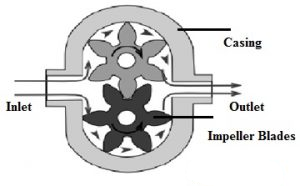
Hydraulic Pump Construction
Construction & Working of a Hydraulic Pump
Below is a diagram of a hydraulic pump assembly. These pumps consist of multiple moving mechanical components that draw energy from an external power source. Most hydraulic pumps feature rotating parts powered by an electric source. The key components of these pumps are outlined below.
Casing
The casing is the outer housing of the pump, protecting its internal components. These casings are typically made of either aluminum or cast iron.
Impeller Blades
Impeller blades rotate within the pump housing. They help spin the surrounding fluid, raising its potential energy and flow rate. In addition, they play a key role in cooling and lubricating the system.
Shaft
The pump shaft is used to mount the impeller. It is usually made of steel or stainless steel, with dimensions determined by the impeller size.
Bearing Assembly
The bearing assembly supports the continuous rotation of the impeller. Most pumps use ball‑type anti‑friction bearings.
Seals
If bearing assemblies fail, the pump can be severely damaged. Seals are therefore used to reduce this risk by protecting bearings from coolants and contaminants.
Working Principle
A hydraulic pump moves fluid from a tank or reservoir to other parts of the system. The inlet and outlet are fitted with check valves: the inlet valve allows fluid to be drawn from the reservoir into the pump, while the outlet valve forces fluid out to the rest of the system. Fluid enters the inlet due to the vacuum created during operation.
A gas engine or electric motor acts as the prime mover to rotate the shaft. Impeller blades are attached to the shaft, so fluid near the blades rotates with the shaft.
When the piston retracts, a vacuum forms inside the cylinder. This vacuum closes the outlet valve and opens the inlet valve, allowing fluid from the reservoir to enter and partially fill the cylinder. When the piston extends, fluid molecules are compressed, the inlet valve closes, and the outlet valve opens to allow fluid to flow through.
Types of Hydraulic Pumps
Hydraulic pumps come in several types, which we will cover below.
Vane Pump
Vane pumps are positive-displacement hydraulic pumps that deliver a consistent flow rate even at varying pressures. This pump design features a set of vanes mounted on a rotor that rotates inside a chamber, along with a pressure relief valve to prevent overpressure from damaging the unit. Vane pumps run at very low noise levels while maintaining a steady flow rate. They operate quietly even at high speeds, up to 3,000 rpm.
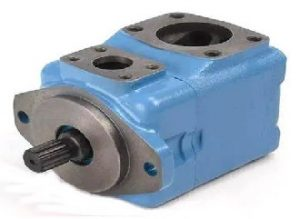
Hydraulic Vane Pump
Hydraulic Gear Pump
Hydraulic gear pumps are available in two main types: internal and external gear pumps. External gear pumps feature two spur gears arranged externally, while internal gear pumps have two spur gears arranged internally. These pumps deliver a consistent volume of fluid with each rotation of the gears.
Hydraulic gear pumps are widely popular due to their simple design, high efficiency, versatility, and availability in various configurations. As a result, they are used across a broad range of industrial, consumer, and commercial applications.
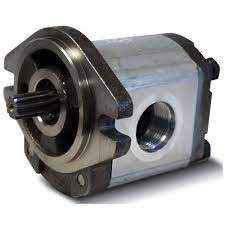
Gear Pump
Hydraulic Ram Pump
Hydraulic ram pumps are commonly used hydraulic pumps for water supply in agricultural, plumbing, waste management, sewage, manufacturing, and engineering applications. These pumps operate using hydropower rather than an external energy source. This makes them a popular choice in many developing countries where access to electricity and fuel for motorized pumps is limited. Using hydropower also helps reduce energy consumption in plants and industrial facilities.
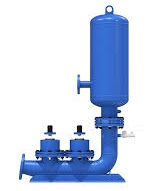
Hydraulic Ram Pump
Electric Hydraulic Pump
Electric hydraulic pumps are fluid power transfer pumps that operate using electricity. They are typically used to move hydraulic fluid from a reservoir to a hydraulic cylinder. While there are various types of hydraulic pumps, the defining feature of all is the use of pressurized fluid to perform work.
These pumps are electrically powered. When an electric current is supplied to the motor, it drives the impellers or other components within the pump system, creating pressure differences. These pressure differences enable fluid to flow through the pump. Electric hydraulic pumps are used to supply hydraulic fluid to industrial machinery such as excavators and elevators.
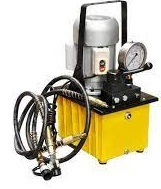
Electric Hydraulic Pump
Hydraulic Hand Pump
Hydraulic hand pumps are fluid transfer devices powered by mechanical energy from a manually operated actuator, such as a toggle, lever, or handle. These pumps are used for applications including water pumping and hydraulic fluid distribution. They serve various tasks, such as directing hydraulic fluid to circuits in helicopters, instrument calibration, and actuating pistons within hydraulic cylinders.
Each hydraulic hand pump features an actuation handle or lever connected to the pump unit. When the handle is pushed or pulled, it pressurizes or depressurizes the hydraulic fluid inside the pump system. This action delivers power to the equipment connected to the pump.
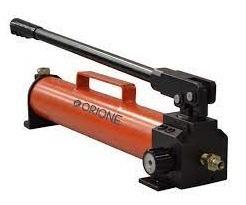
Hydraulic Hand Pump
12V Hydraulic Pump
12V hydraulic pumps run on a 12V DC power supply from a battery or motor, used to move water to or from a desired location. They are typically employed to push, pull, and lift heavy loads in mobile and vehicle-mounted machinery. These pumps are widely used because they can operate from compact batteries.
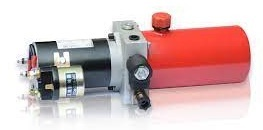
12V Hydraulic Pump
Air Hydraulic Pump
Also known as pneumatic hydraulic pumps, these units use compressed air to actuate the pump mechanism and generate power from pressurized fluid. They are used across various industries to lift heavy loads and move materials with minimal initial force.
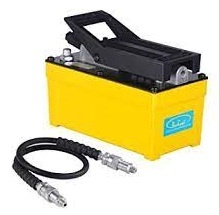
Air Hydraulic Pump
Hydraulic Piston Pump
Hydraulic piston pumps transfer hydraulic fluid through a cylinder using a plunger to build pressure, enabling machinery to lift, push, and pull heavy loads. These pumps serve as the power source for heavy‑duty equipment such as backhoes, excavators, loaders, cranes, and diggers. They are widely used across industries including aerospace, automotive, military, power generation, manufacturing, and marine.
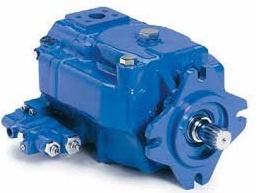
Piston Pump
Hydraulic Clutch Pump
Hydraulic clutch pumps feature a clutch assembly that allows the operator to apply the necessary pressure to engage or disengage the clutch mechanism. These clutches are designed to connect two shafts and lock them together to rotate at the same speed, or to separate the shafts so they can rotate at different speeds when needed for deceleration or gear shifting.
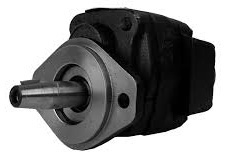
Hydraulic Clutch Pump
Difference Between a Hydraulic Pump and a Hydraulic Motor
The key differences between a hydraulic pump and a hydraulic motor are outlined below.
| Hydraulic Pump | Hydraulic Motor |
|---|---|
| A conversion device that converts mechanical energy into hydraulic energy (pressure). | A conversion device that converts hydraulic energy (fluid pressure) into mechanical energy, providing torque and rotational speed. |
| Features a large oil suction port and a small oil discharge port. | Features similar-sized suction and discharge ports. |
| Operates at high speeds. | Operates at lower speeds. |
| Typically designed for unidirectional operation. | Often designed for bi-directional operation. |
| Has high volumetric efficiency. | Generally has lower volumetric efficiency. |
| Exhibits low internal leakage. | Exhibits higher internal leakage. |
| Vane is mounted radially (or at an angle to ensure contact during rotation). | Vane is mounted radially with springs to ensure contact at startup. |
| Does not require a vacuum in the low-pressure chamber. | Requires positive sealing in the low-pressure chamber to ensure efficient oil intake. |
| Requires low starting torque (driven by a prime mover). | Requires high starting torque to initiate rotation under load. |
| Common types: vane, piston, gear, and screw pumps. | Common types: piston, gear, and vane motors. |
Advantages of Hydraulic Pumps
- High energy efficiency.
- Speed and flow are easier to control and monitor compared to other pump types.
- Lower maintenance costs.
- High precision and ease of control.
- Delivers stable force or torque despite changes in speed.
- Leaks are relatively easy to detect.
- No risk of sparking, making them safe for use in mines and chemical plants.
- Operates with reduced noise levels.
Disadvantages of Hydraulic Pumps
- Handling hydraulic fluid and repairing leaks can be difficult.
- Prone to failure due to fluid contamination, incorrect viscosity, overheating, aeration, cavitation, and over-pressurization.
- Require regular maintenance.
- Even a small leak can lead to significant performance issues or system damage.
- Increased risk of accidents due to high operating pressures.
- High-pressure fluid can cause injury if hoses or lines fail or are not properly rated.
Applications
Hydraulic pumps are used across a wide range of applications, including:
- Industrial hydraulic machinery.
- Mobile heavy equipment such as cranes, excavators, loaders, vacuum trucks, tractors, forestry machinery, dump trucks, graders, and mining equipment.
- They are more widely used in mobile applications than in fixed industrial setups, though they remain extensively employed in industrial environments.
- In the automotive industry, paired with jacks and engine hoists for lifting vehicles, heavy loads, platforms, and pulling engines.
- Mechanical workshops, powering tools for drilling, cutting, pulling, pressing, and other operations.
- Woodworking shops, for log splitters.
- Various production equipment, including forklifts, concrete mixers, and conveyors.
Hydraulic Pump Construction
A diagram of the hydraulic pump assembly is shown below.
Summary
This overview covers hydraulic pumps – their types, working principles, and applications. These pumps are designed for industrial, residential, and commercial use, generating useful energy by pressurizing various viscous fluids. Simple and efficient, hydraulic pumps are essential for moving fluids and rely on power from hydraulic cylinders to control a wide range of machinery and devices.
Here's a question for you: What is another name for a hydraulic pump?
Related Articles
Diode Dynamics: Real-World Behavior in Fast Power and RF Circuits

Amanda Miller
Amanda Miller is a senior electronics engineer with 6 years of experience. She focuses on studying resistors, transistors, and package design in detail. Her deep knowledge helps her bring innovation and high standards to the electronics industry.
Subscribe to JMBom Electronics !